Farming Prosperity & Optimism
- 1 min read
Individuals at the grassroots have been a vital part of the support system for mitigation and response efforts during disasters in India. These individuals are developing the capacities and leading efforts to drive disaster management and resilience in their communities. ‘Stronger Together’: A compendium of stories of courage & resilience during disasters, prepared by Reliance Foundation and Sphere India, captures best practices by individuals at the grassroot level for mitigation, preparedness, and response to various disasters in India. It will serve as a powerful source of inspiration for others to learn and draw strength, enabling them to better prepare for and respond to disasters in India.
More Publication
One village at a time: Towards a climate resilient nation
 Team Reliance Foundation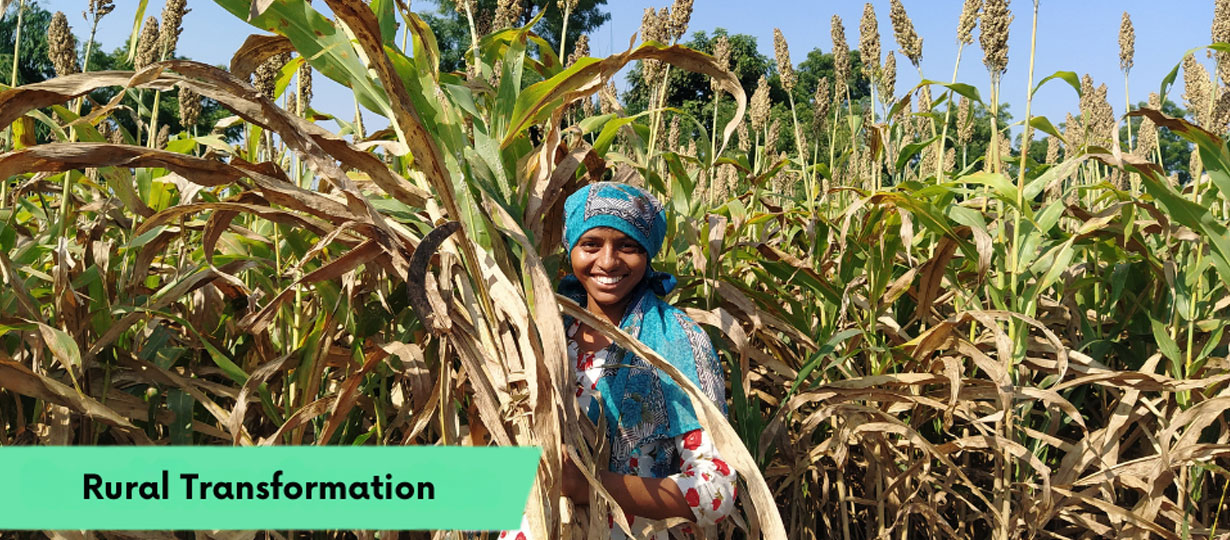
Climate change is unequivocal and must be tackled as a national priority in order to enhance climate resilience in Indian villages. Rural communities especially face the brunt of these conditions as it creates stress on natural systems especially on water resources. Excess or scarce rainfall, droughts, land degradation, diminished agriculture production or drying up of water resources all constitute risks faced by agrarian producers as a result of climate change. These risks are compounded by poor farming conditions, increased input costs, inefficient land use and falling incomes among other factors.
The Rural Transformation BIJ (Bharat-India Jodo) programme of Reliance Foundation is working in more than 5,000 villages to achieve climate resilience and empower communities to enhance their adaptive capacities against the impact of climate change. It endeavors to do so through sustainable management of natural resources, augmenting water supply for both livelihood and drinking water purposes, and promoting climate-smart agriculture practices. These objectives align with the goals of National Action Plan for Climate Change and State Action Plan for Climate Change to address challenges, assess vulnerable areas and develop climate action strategies. In particular, these interventions also align with Sustainable Development Goals 6 and 13 that deal with sustainable management of water and climate action respectively. These synergies enable adaptive responses to climate change and provide a holistic approach to increasing resilience at the community level.
Interventions
Enhancing Drinking water accessibility in villages
Water resource management is one of the pivotal aspects of Reliance Foundation BIJ intervention towards creating climate resilience. In many cases, even the basic necessity of drinking water is not met due to lack of accessible sources. This can compromise with both health and hygiene outcomes as well as affect productivity in agricultural and other livelihood activities. Vulnerability to climate-related disruptions increases without access to adequate infrastructure for storage and distribution. The BIJ programme seeks to minimise these risks by mobilising rural communities to identify these gaps in their water management systems and supports them with the appropriate mechanism to do so.
Grey Water Management
Incorporating grey water management strategies into village infrastructure is not only an effective means of addressing water-related challenges exacerbated by climate change but also a proactive step toward building the resilience needed to navigate an increasingly unpredictable climate future.
Soil and Moisture Conservation
Soil and moisture conservation is a key aspect of natural resource management at the local level. Reliance Foundation BIJ promotes these practices to contribute to improving water availability, preventing run-off, supporting sustainable agriculture, promoting biodiversity to enhance capacity of ecosystems and communities.
Climate Smart Agriculture Practices
It is important that agriculture should be resilient to climatic risks as well as increase production to meet increasing food demands. The Rural Transformation BIJ interventions seek to integrate agronomic interventions with climate smart practices and farmers’ traditional knowledge at local level to ensure that crops can withstand the challenges of changing climatic conditions, ensure consistent agricultural production, protect livelihoods and contribute to sustainability.
- Capacity building: Providing farmers with knowledge about climate change impacts and adaptation strategies empowers them to make informed decisions. Here farmers are working on crop cutting experiments, practices that will contribute to increase crop yields.
- Diversification of crops: Planting a variety of crops that have different climate tolerances and growth patterns helps spread risk. If one crop fails due to adverse conditions, others may still thrive, reducing the vulnerability of the entire system.
- Mechanisation of farm operations contributes to climate-smart agriculture by optimizing resource use, enhancing soil and water management and bolstering agricultural productivity in the face of climate variability.
- Incorporating biofortified varieties of crops and better seed varieties promotes crop production better able to withstand local climatic changes with enhanced disease and pest resistance.
More Stories
This is How Digital Farm Schools Are Helping Women Farmers to Tackle India's Agricultural Gender Gap
 Mohini Ganguly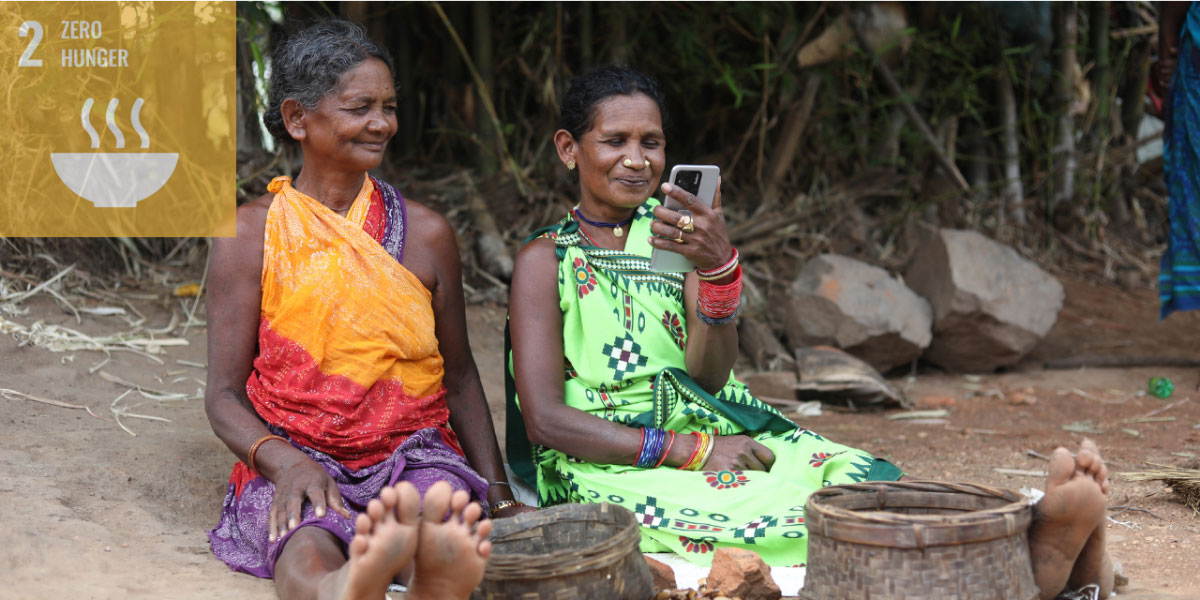
The Food and Agriculture Organization (FAO) of the United Nations marked International Women’s Day in 2023 by emphasizing the importance of giving women in agriculture access to digital technologies.
In September 2023, the New Delhi G20 Leaders’ Declaration committed to invest in inclusive, sustainable and resilient agriculture, and to promote innovation for agricultural value chains and systems by and for women farmers.
Both events signal the growing realisation that the Sustainable Development Goals of Ending Poverty (SDG1) and Zero Hunger (SDG2) are going to require empowered women agriculturists.
How Important are Women Farmers to Rural Development?
In developing countries, women make up on average 43 percent of agricultural labour, and almost 50 percent in Eastern and South-eastern Asia, and sub-Saharan Africa.
In India, women are a significant part of the agriculture sector but tend not to own the land they cultivate. In 2021-22, 62.9 percent of women workers (and 75.9 percent of rural women workers) were engaged in agriculture but only 14% had land holdings.
Growth in the agriculture sector is two to four times more effective in raising incomes among the poorest compared to other sectors, and growth in small-scale agriculture is more effective at reducing hunger and poverty than any other sector.
Although we know that empowering farmers, and particularly women farmers, is an important way to address poverty, recent Indian agricultural growth has been weak. According to the Economic Survey Report 2022-23, it fell to 3 per cent in 2021-22 and was 3.3 per cent in 2020-21. In comparison, industrial production grew 10.3% in 2020-21 and by 4.1 percent in 2021-22. India’s agricultural sector is growing slower relative to other sectors.
Increasing agricultural productivity is crucial to sustainable development but the reality is that, lacking land ownership, and with lower rates of literacy and limited access to digital tools, women need very different support and training to men.
How Does Digital Technology Help Women Farmers Increase Agricultural Productivity?
There is a particularly acute digital gender gap in India, particularly in rural areas. Even simple additions of technological solutions, such as access to information in one’s native language, can show remarkable effects.
Individuals using the Internet, by gender
(Selected Asian economics)
Data source: International Telecommunication Union, 2021
Graphic source: Observer Research Foundation
In Gujarat, the women-led Bhungroo water management system has helped more than 18,000 marginal farmers. Drought and water-logging dominates the lives of the underprivileged women farmers of the region. Bhungroo is a technology that stores excess rainfall underground and can retrieve it when water is scarce. It’s estimated that longer growing seasons have increased the typical family’s annual income from US$210 to US$700.
Solidaridad Regional Expertise Centre engages with women dairy farmers to increase their digital access and digital literacy. Women play a significant role in dairy farming and do a large amount of the labour involved, however, due to lack of resources or digital literacy, they are often excluded from formal supply chains. Solidaridad disseminated best practices, collaborated with experts to facilitate knowledge-building for these women, and also trained them on financial literacy.
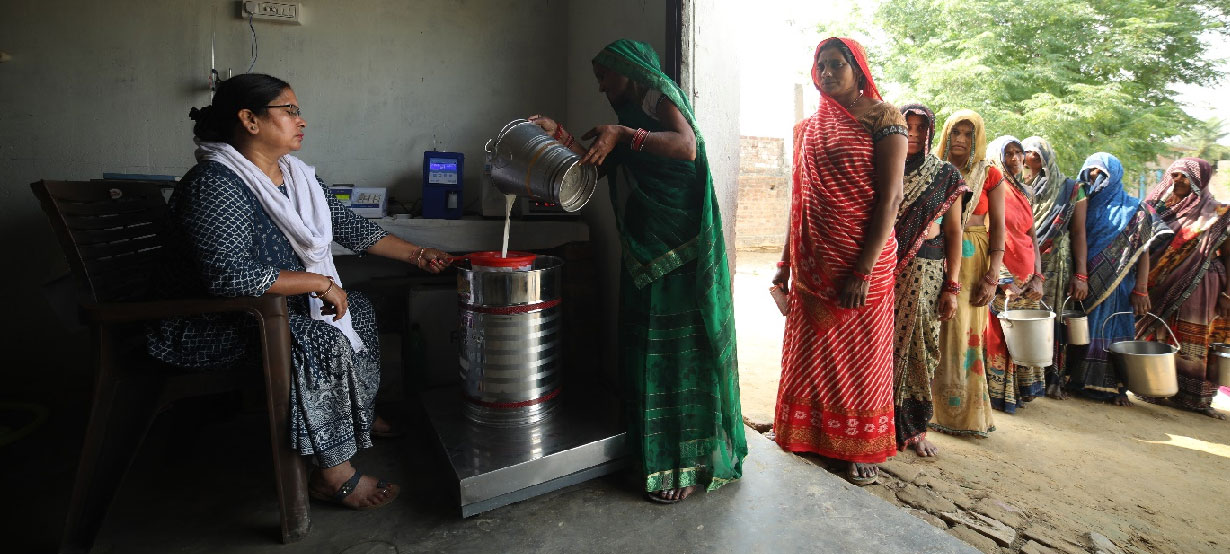
Solidaridad Facilitating Women Dairy Farmers in Uttar Pradesh
An important part of the problem is to understand that there are gendered differences in agriculture at the grassroots. Digital Farm School (DFS) is a Reliance Foundation programme which has been working to empower farmers, and address women farmers’ issues.
What is a Digital Farm School?
Digital Farm Schools are education platforms that build on the concept of the Farm Field School (which has been implemented by the FAO in several countries). Digital Farm Schools also incorporate ‘phygital’ (physical plus digital) modes and connect groups of farmers. Students gain livelihood, resilience, and improvement information from each other as well as from experts. Crucially, communication is with those who work on the farmland, and not just the owner.
Reliance Foundation’s five-year DFS initiative began in 2022-23. It is present across 15 states in India, with mostly small and marginal farmers who farm nine crops that are of importance to improve the country’s food security and national income.
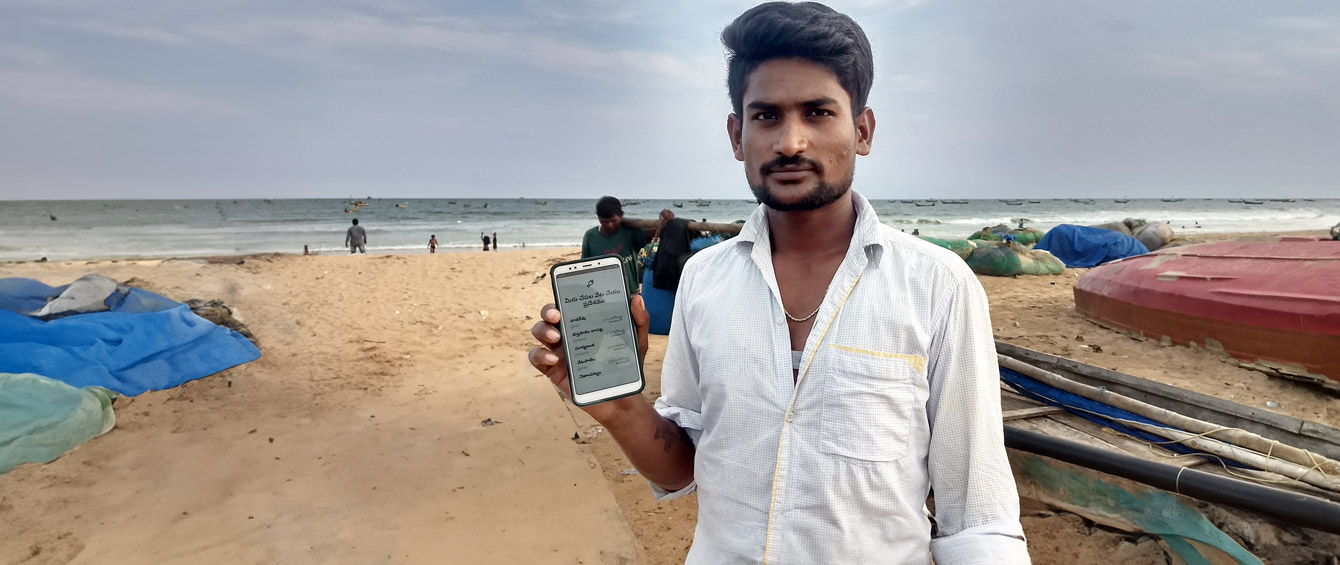
The DFS communicates with farmers throughout the crop cycle, collating their queries and needs, and uses this feedback to increase their access to information through multiple communication platforms, such as voice message services, text messaging, WhatsApp groups, and physical interactions.
The use of digital modes reduces the time required to engage with the platform, as well as the cost involved, as a large part of it happens over phones, which most of the beneficiaries already have access to.
Digital Farm Schools and the Needs of Women Farmers
Throughout the geographical locations it works in, the DFS also engages with women agriculturists. The ease of access and flexibility works for women farmers. For instance, there are image and video advisories for those who have limited literacy.
I found it very difficult to manage weeds. Based on DFS’s suggestion, I opted for the Lokman, a high yielding variety of wheat, treated them with bio-fertilizer and sowed it in right time. I could arrest the spread of weeds using the recommended dose of herbicides as prescribed by experts during an audio conference. The best part of DFS is that all the information and advice is free and on time.
– Anita Singh
Raikwar village, Amarpatan tehsil, Satna district, Madhya Pradesh
One success story comes from the Balaghat district, Madhya Pradesh. The women of the Baiga tribe are largely dependent on agricultural income and daily wage labour and have less access to information than their male counterparts. In order to engage with them, the DFS programme first made contact through the Self Help Group (SHG) in Boda village. The SHG communicated specific pain points they faced, such as increasing pestilence and crop disease.
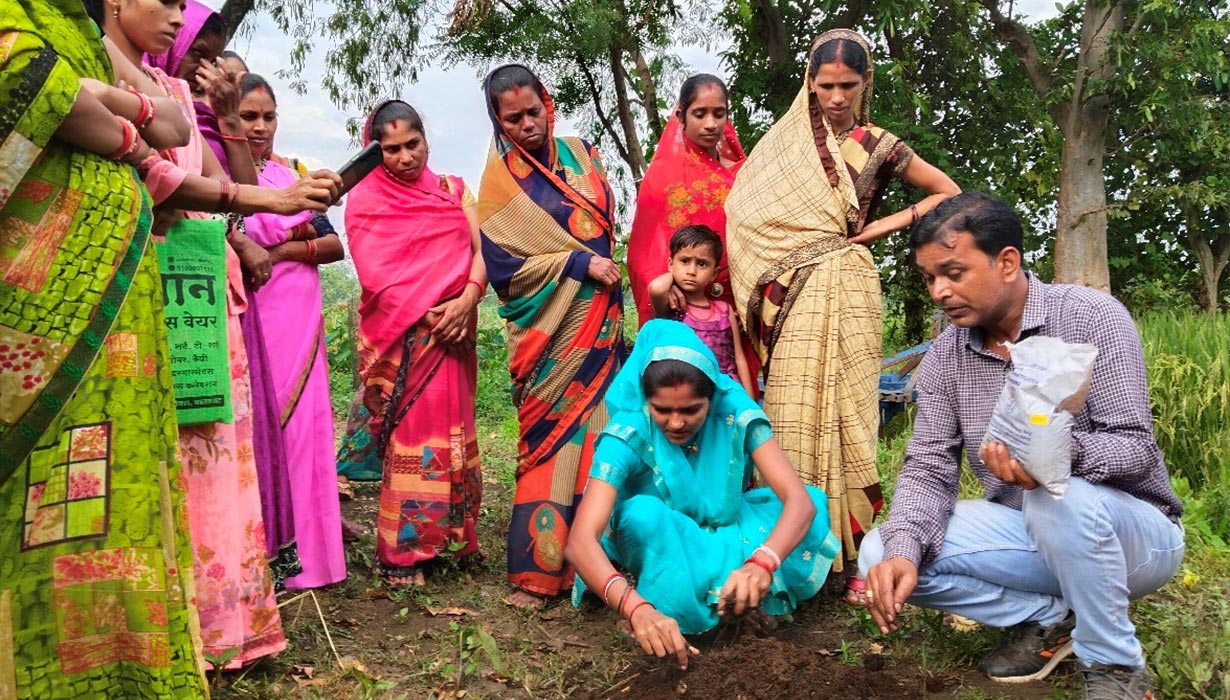
Women in the DFS Programme from Balaghat, Madhya Pradesh
151 women from 13 villages were engaged. These women received Reliance Foundation Information Services advisories and came together through a WhatsApp group. They also interacted with experts through multi-location Audio Conferences, which they could attend from their own homes.
Women Farmers and Their Micro-Enterprises
In the areas where DFS has been established, 62 percent of the households of farmers engaged in the programme own livestock and other micro-enterprises for additional income. While farming is considered the most important part of their livelihood, micro-enterprises are a significant part of their livelihood.
Management of these micro-enterprises is mainly in the hands of women. The DFS initiative engages with women specifically in these areas, providing information on kitchen gardens, livestock management, and so on.
Shaping Perspectives on Practice and Policy for Millets in India
- 3 min read
India is the world’s largest millet producer and its average production of 16.93 million metric tons during 2019-22 was about 11% higher than the production during 2014-18. Though productivity has markedly increased over the years, the area under millet cultivation has significantly reduced.
Having observed 2018 as its ‘National Year of Millets’, India presented the proposal for the ‘International Year of Millets’ (IYOM) in the United Nations. At the 75th General Assembly session of the UN in March 2021, the year 2023 was declared IYOM to increase global awareness of the benefits of consuming and growing millets.
Since 2010, Reliance Foundation has been focusing on sustainable agriculture and strengthening of food systems through a collaborative approach with various stakeholders. The work with millet small and marginal farmers is another step to build resilience in the face of changing climate while enhancing the nutritional status of communities.
On December 19, 2023, diverse stakeholders from across India’s millet landscape called for sustaining the momentum generated during the International Year of Millets 2023 (IYOM) at a roundtable discussion organised by Reliance Foundation.
The discussion saw policymakers, farmer representatives, development sector stakeholders, researchers and industry representatives echo the need for greater collaboration, increased farmer-focused efforts, and deliberated successes and challenges from both practice and policy within India’s millet landscape.
A publication, ‘Fostering Resilience for Sustainability: Reliance Foundation's Millet Experiences’, that documents learnings from millet interventions in different states was released on the occasion. Fostering Resilience for Sustainability showcases end-to-end interventions that include making quality seed accessible to farmers, providing continued technical support, strengthening market linkages, empowering women’s agency and building awareness of millets.
More Publication
Shaping Perspectives on Practice and Policy for Millets in India
- 19 December, 2023
- New Delhi
- 11:42 AM
- 3 min read
India is the world’s largest millet producer and its average production of 16.93 million metric tons during 2019-22 was about 11% higher than the production during 2014-18. Though productivity has markedly increased over the years, the area under millet cultivation has significantly reduced.
Having observed 2018 as its ‘National Year of Millets’, India presented the proposal for the ‘International Year of Millets’ (IYOM) in the United Nations. At the 75th General Assembly session of the UN in March 2021, the year 2023 was declared IYOM to increase global awareness of the benefits of consuming and growing millets.
Since 2010, Reliance Foundation has been focusing on sustainable agriculture and strengthening of food systems through a collaborative approach with various stakeholders. The work with millet small and marginal farmers is another step to build resilience in the face of changing climate while enhancing the nutritional status of communities.
On December 19, 2023, diverse stakeholders from across India’s millet landscape called for sustaining the momentum generated during the International Year of Millets 2023 (IYOM) at a roundtable discussion organised by Reliance Foundation.
The discussion saw policymakers, farmer representatives, development sector stakeholders, researchers and industry representatives echo the need for greater collaboration, increased farmer-focused efforts, and deliberated successes and challenges from both practice and policy within India’s millet landscape.
A publication, ‘Fostering Resilience for Sustainability: Reliance Foundation's Millet Experiences’, that documents learnings from millet interventions in different states was released on the occasion. Fostering Resilience for Sustainability showcases end-to-end interventions that include making quality seed accessible to farmers, providing continued technical support, strengthening market linkages, empowering women’s agency and building awareness of millets.
More Events
Build on International Year of Millets momentum for ‘the crop of the future’ say millet stakeholders
- 19 December, 2023
- New Delhi
- 6 min read
New Delhi, December 19, 2023: Diverse stakeholders from across India’s millet landscape emphasized that challenges of food security, farm livelihoods and nutrition diversity can be resolved in a climate-resilient manner, by building on the momentum generated during the International Year of Millets (IYOM). They were sharing experiences at a multi-stakeholder conference ‘Shaping Perspectives on Practise and Policy for Millets in India’, organised by Reliance Foundation here today.
Policymakers, farmer representatives, development sector stakeholders, researchers and industry representatives echoed the need for greater collaboration, increased farmer-focused efforts, and deliberated successes and challenges from both practice and policy within India’s millet landscape.
Delivering the keynote address at the conference, Ms. Shubha Thakur, Joint Secretary, Ministry of Agriculture & Farmers Welfare, detailed Government of India’s efforts to take the millets agenda ahead. She said, “We have created six task forces, in Ministry of Commerce, Ministry of health, one in the nutrition sector to continue the journey of millets. Millets are a crop for the future.” She added “It is heartening to see Reliance Foundation working with farmers. A multistakeholder approach is very important if millets are to succeed. To help increase farmers’ incomes, there needs to be value addition through branding, export potential and more.”
Mr. Jagannatha Kumar, CEO, Reliance Foundation, said, “This decade has been historic for the global food systems dialogue, and transformational for millets. We are witnessing the discourse change to millets being sought after and India has led this change from the front.
The strong momentum generated so far should enable us to leapfrog into an era when millets are coming of age in providing food security and diversity amidst climate change. This will also help balance natural resources through climate resilient farming practices while securing better livelihoods for small and marginal farmers through a value chain approach. It is essential to build on this momentum, with shared development goals. At Reliance Foundation, we are deeply committed to diversifying food and farming systems with millets and we will continue build on discussions such as today’s along with other opportunities to share our learnings with stakeholders across the ecosystem.
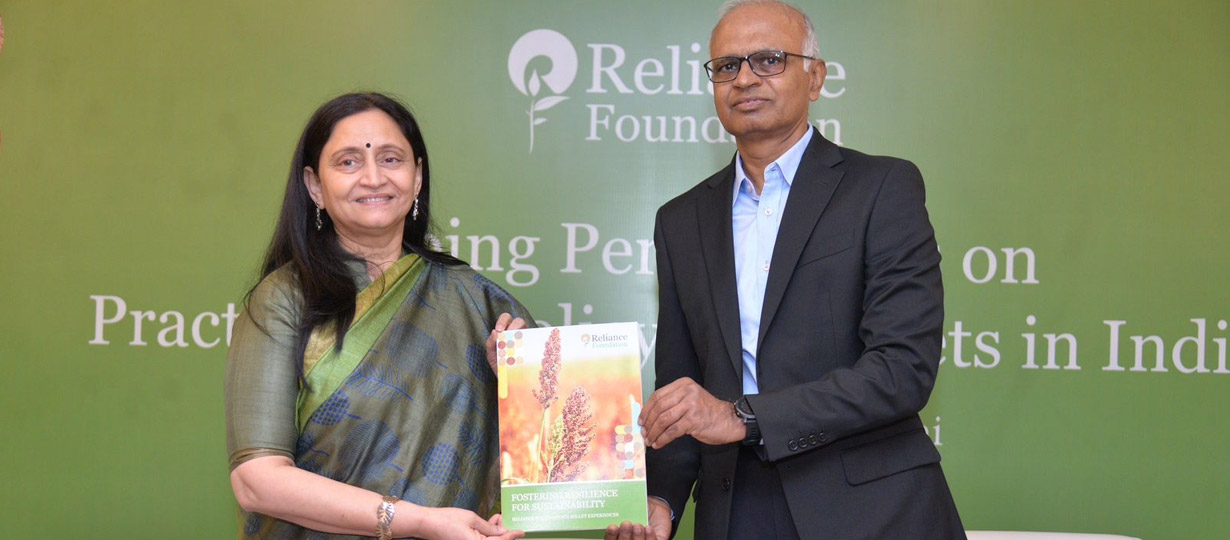
A publication, ‘Fostering Resilience for Sustainability: Reliance Foundation's Millet Experiences’, that documents learnings from millet interventions in different states was released on the occasion. Fostering Resilience for Sustainability showcases end to end interventions that include making quality seed accessible to farmers, providing continued technical support, strengthening market linkages, empowering women’s agency and building awareness of millets.
Speakers at the discussions included Raman Wadhwa, Director, NRLM; Dr Neelam Patel, Senior Advisor, NITI Aayog; Priyanka Singh, Chief of Rural Transformation, Reliance Foundation; Prof. Ruth DeFries, Columbia University; Prasoon Bhardwaj, Head of Staples, Reliance Retail; K P Kavitha, CEO, Kazhani Farmers Producer Co, TN (FPO); R K Tiwari, Asst Director, Dept. of Women and Child Development, Madhya Pradesh; Savitaben Vasava, millets farmer from Narmada, Gujarat. Senior policymakers, researchers, practitioners and agriculture experts participated in the event.
Since 2010, Reliance Foundation has been focusing on sustainable agriculture and strengthening of food systems through a collaborative approach with various stakeholders. The work with millet small and marginal farmers is another step to build resilience in the face of changing climate while enhancing the nutritional status of communities.
Having observed 2018 as its ‘National Year of Millets’, India presented the proposal for the ‘International Year of Millets’ (IYOM) in the United Nations. At the 75th General Assembly session of the UN in March 2021, the year 2023 was declared IYOM to increase global awareness of the benefits of consuming and growing millets.
India is world’s largest millet producer and its average production of 16.93 million metric tons during 2019-22 was about 11% higher than the production during 2014-18. Though area under millet cultivation has reduced, productivity has markedly increased over the years.
More Media Releases
Technology for Rural Development
India is today among the countries leading the fourth industrial revolution. Now is an opportune moment for the country’s rural communities to close gaps that have persisted through the past. Artificial Intelligence, the Internet of Things, Blockchain, and several other emerging technologies have the potential to help accelerate the transformation of rural communities.
Technology in agriculture
Agriculture, more than any other sector, has immense potential to accommodate these technologies and overcome yield barriers at a time when climate-related challenges threaten progress.
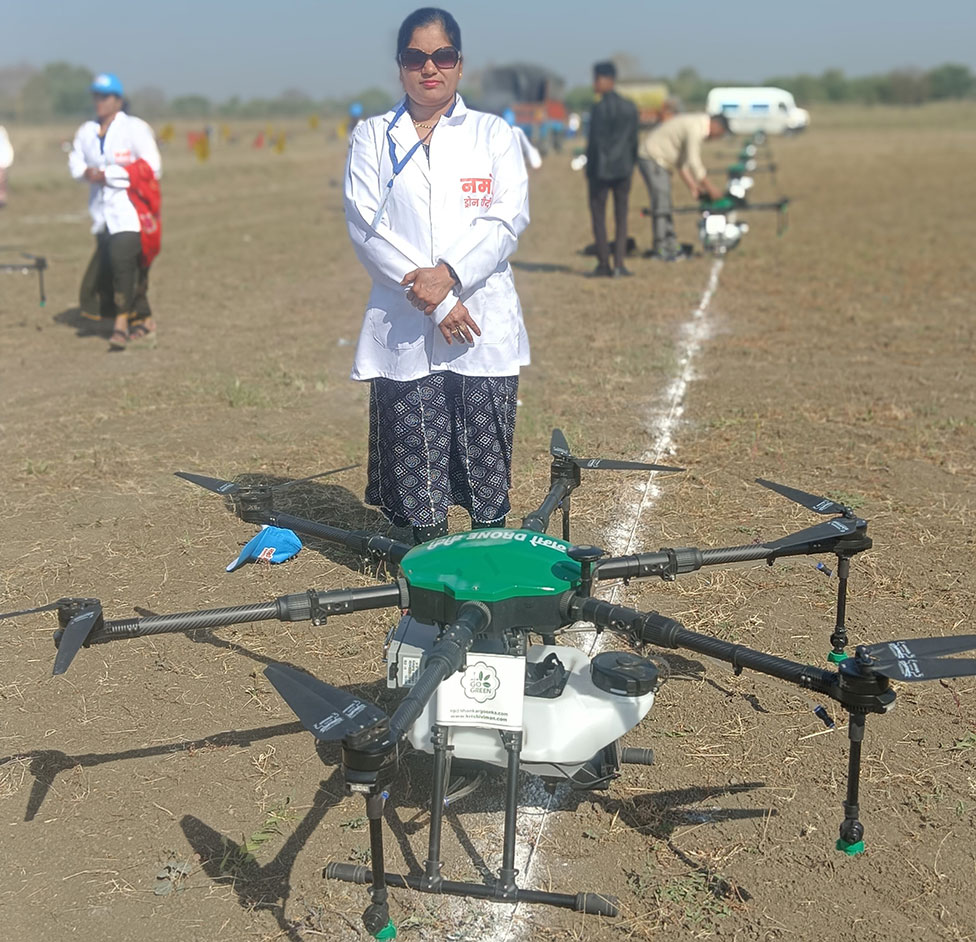
In places across India, Reliance Foundation is demonstrating the effective use of drones in farm operations. Finding new ways to assess crop health for insurance and other purposes is another strong area of focus.
While new technologies are beneficial and even crucial to addressing problems like labour shortage, their adoption is not without challenges given the small land-holding sizes of farms. Farmer collectives are helping overcome the barriers of scale.
Addressing climate-related challenges
Climate-related challenges are set to exacerbate and disproportionally affect rural communities. These challenges demand more resilience from rural households. Democratising information and knowledge are essential to enhancing resilience. The technologies of yesterday and today are being tied together to ensure data’s last-mile reach while efforts are on to extract more meaningful insights from data to tailor messages more effectively.
Tech-aided empowerment
Drawing from years of efforts of all stakeholders, Reliance Foundation has redoubled its commitment to skilling and empowering women through women-focused initiatives that encourage tech-aided micro-enterprise development at scale.
The current decade is fertile to achieve progress quickly. It is hoped that as a new self-reliant India emerges to take on global challenges on multiple fronts, people from the country’s rural communities will be those in the lead.

More on Rural Transformation
Community Capacity Enhancement
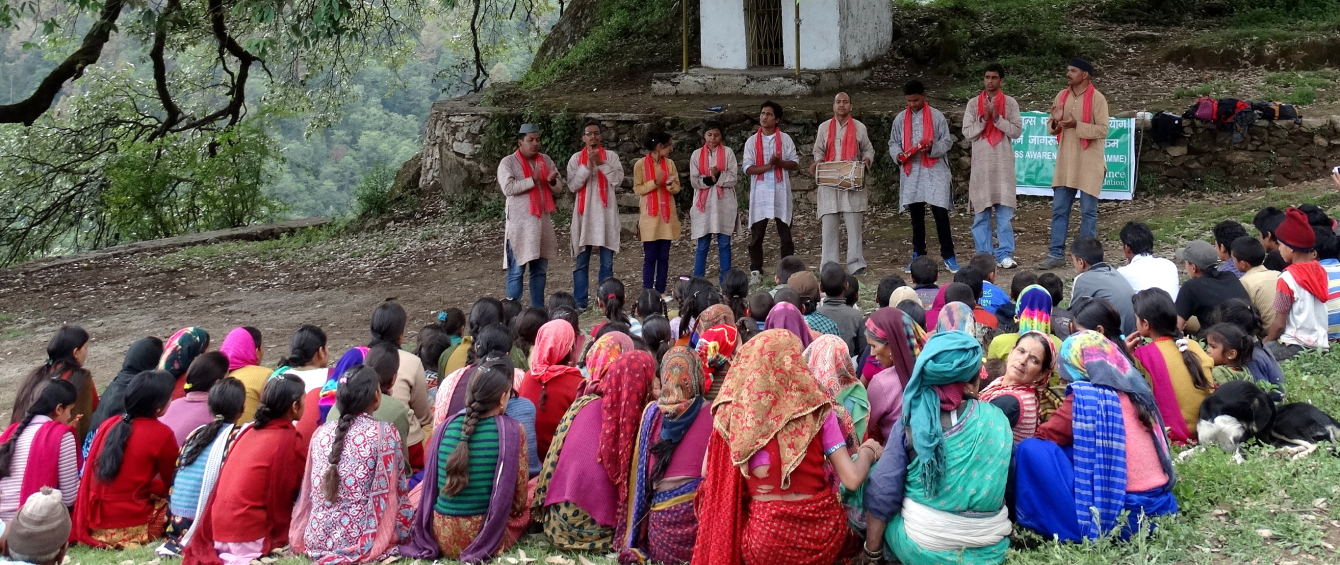
Reliance Foundation believes that development is truly sustainable only when communities are fully in-charge of their development. Towards this goal, Reliance Foundation works with rural communities to enhance their capacities for planning and taking up developmental activities.
Planning capacity is built when village-level development plans are prepared in a participatory manner with village-level institutions and all people in a community, especially women. In a similar manner, dedicated water use planning further cements efforts to sustain water-related gains and improves water governance.
Throughout the year, capacity enhancement initiatives largely aimed at strengthening livelihoods are taken up with collectives and individuals. These tailored efforts complement village development plans and usher holistic development in rural communities.
More on Rural Transformation
Improved nutrition for rural communities
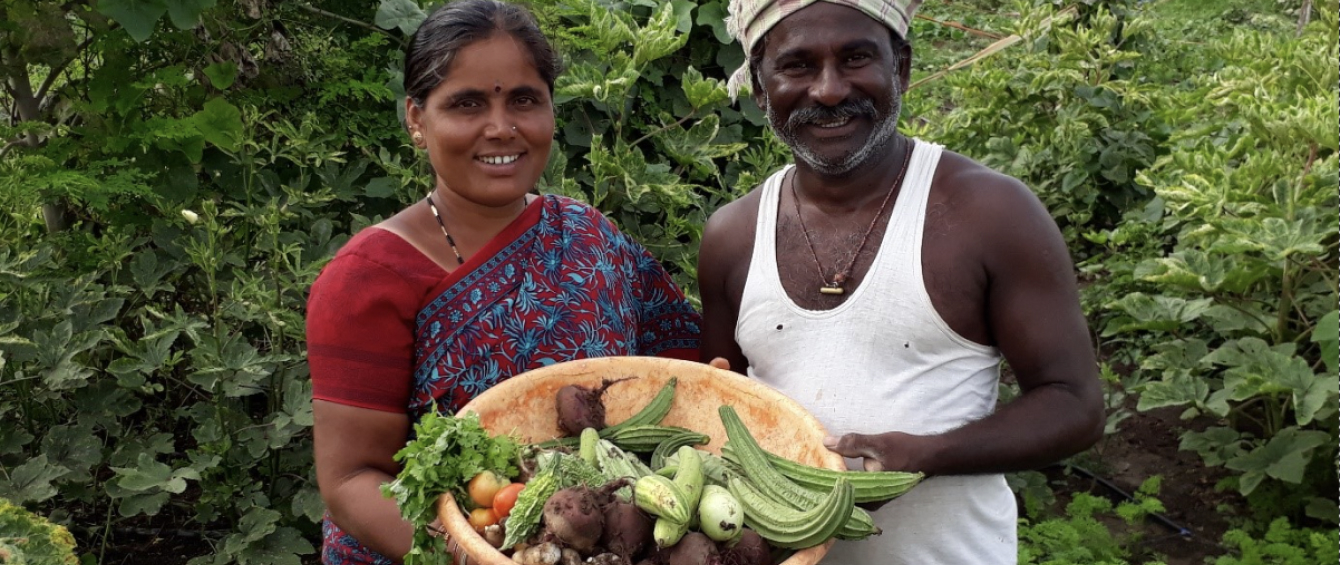
Although India’s food production is powered by India’s villages, inadequate dietary diversity in rural households is a significant concern. Reliance Foundation takes a community-centric approach to improve dietary diversity. Raising awareness of the importance of a balanced diet is an indispensable part of this approach.
The approach begins with helping communities to increase their farm yields. Households are encouraged to diversify food production to include cereals like millets, fruits, vegetables, milk, legumes and animal sources of protein. Vegetable and fruit production are encouraged through backyard kitchen gardens. Several thousand such gardens have been established by rural communities across India at homes, schools and Anganwadis.
Water is linked closely to nutrition, which is why Reliance Foundation’s efforts to conserve water are also aimed at ensuring drinkable water is provided as well as water for agriculture.
Besides enhancing source inflows through recharge wells and rainwater harvesting, Reliance Foundation focuses on improving access to clean drinking water by supporting the development of storage and distribution infrastructure. This includes co-development of piped water supply systems and community-owned and constructed water storage tanks, through various participatory efforts.
More on Rural Transformation
Empowering Women in Rural Communities
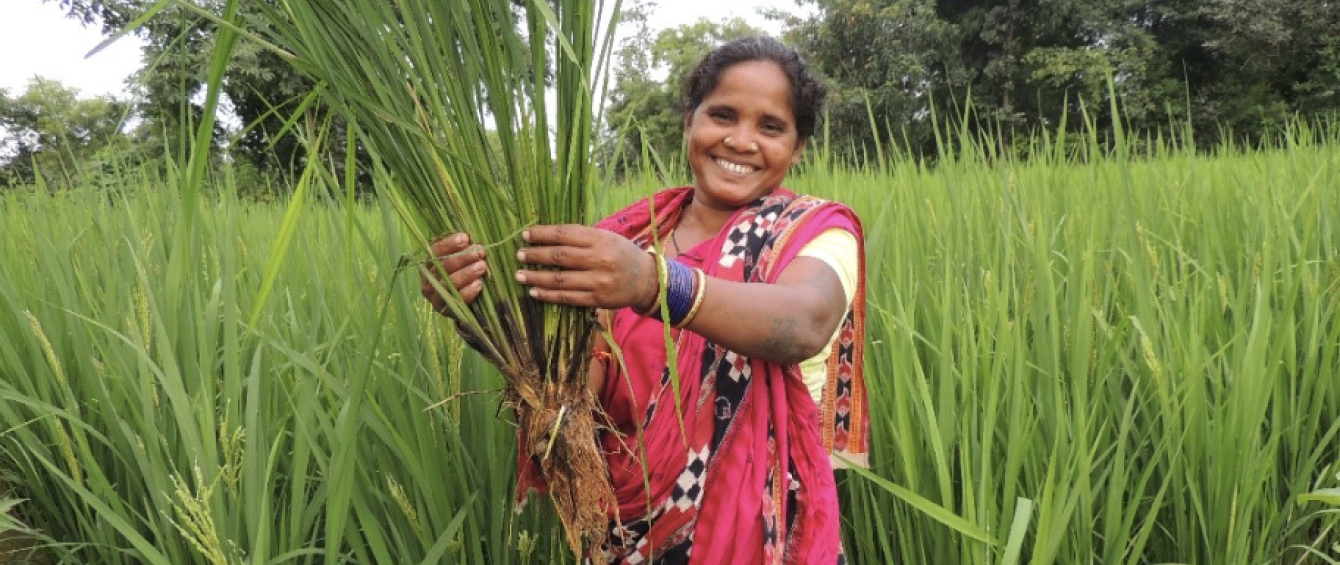
Integral to India’s rural workforce, women have a key role to play in various on farm and off-farm activities. Reliance Foundation’s Rural Transformation programme is centred around the role of women in enhancing resilience and raising household incomes through diversification through its DRIWE and information services initiatives.
By leveraging the collective power of self-help groups, Reliance Foundation supports women in agriculture and encourages alternative livelihoods through skill and capacity development. Women are supported in establishing businesses, building brands and developing leadership capacity. The aim is to pave their participation in society and local governance and give them a greater say in the development of their communities.
Reliance Foundation has worked with self-help groups in value chains of crops, dairy, arts and handicrafts.
In 2023, the Reliance Foundation and Bill & Melinda Gates Foundation launched an initiative to empower one million women entrepreneurs in several states in India, by strengthening women collectives, testing and scaling innovations and establishing replicable models of entrepreneurship with women-led enterprises. This initiative has been developed with and will be delivered through partnerships with the State Rural Livelihood Missions, as well as with the support of several implementation partners. Over the next three years, this initiative will support and engage women in farm and non-farm income-generating activities, to help them achieve an annual income of at least Rs. 1 lakh as envisioned by the Government Of India’s Ministry of Rural Development.
