Encouraging the journey of play for early childhood education in India
 Jagannatha Kumar
When early childhood experts, gather, it is unlikely to be a quiet place. As they sang, shared, and laughed, they walked the talk on the play-based learning approach in India. There are over 13 lakh Anganwadi centres dedicated to foundational development in India. The focus on the early years from birth to age six, as a critical window in a person’s life, has been long recognised.
With innate curiosity, children engage in play to explore, learn, and grow. Activities, stories, or community interactions with cultural significance permeate their world. The academic system, is prone to memorisation and standardised tests and teacher-led instruction.
When children choose activities and try them in different ways, they find independence. They also engage with others in the space and develop mental agility through the process. Unlike structured classrooms, play-based learning enables children to enjoy spontaneous, non-goal-directed activity. With anticipation and surprise children develop an interest and in emotional and physical growth.
Growing interest in play-based learning
There is interest now, in play-based learning a fundamental pedagogical approach. This is a step away from looking at it as a supplementary tool. Studies – including ground-breaking research by Nobel laureate James Heckman – find quality early education has long-term benefits for individuals and societies. UNICEF in its advocacy brief on learning through play, emphasises this. It notes that preschool years play helps children explore the world as well as develop creativity for life.
There is a need for educator training, addressing social norms and building awareness. Recognising these, the National Education Policy 2020 and the NIPUN Bharat Mission are bridging this divide, to achieve foundational literacy and numeracy by 2026-2027.
The true spirit of play-based learning is what occurs in classrooms or early childhood centres while also at homes and in communities. Play should seep into learning spaces, guiding activities while being engaging and inclusive. This requires an enabling, collaborative approach. Educators, parents and community members together, nurture the child’s innate curiosity. Everyone co-creates exciting learning environments. Children develop skills for critical thinking and a strong foundation for school readiness and future learning.
Building stakeholder confluence on play-based learning
During the recent conference held by Reliance Foundation on ‘Building Flourishing Futures’ in Mumbai, practitioners, policy makers and academia and representatives from institutions engaged in play-based learning themselves. Reliance Foundation aimed to build on this crucial point: everyone – practitioner or community member – needs to be hands-on, to walk the talk. The unique convergence of national and international knowledge and practice, the conference transformed into a buzzing multiverse of ideas. It was also an opportunity to explore further practice and policy opportunities. Key stakeholders from government, civil society, grassroots and academia shared diverse experiences.
Government and the larger ecosystem collaboration with organisations and communities is integral. They enhance caregiver capabilities through insights from their body of work and learning. Technological and knowledge capabilities of CSR entities, educational experts, research organisations and knowledge partners across India can come together. They can build educator capacity to deliver play-based learning, contemporary child-friendly learning facilities. With interactive education material, focus on nutrition and development along with other ideas we can step up on leveraging learning on the latest global practices.
Scaling up innovative ECCE approaches
Early Childhood Care and Education (ECCE) initiatives provide an opportunity for innovation, particularly at the intersection of enabling policies and emerging educational technologies. With India’s robust policy framework, the stage is set for significant advancements. We are looking at an advantage of a growing demographic dividend and the largest population of youth in the world. The opportunity lies in strengthening our wealth of human resource early, really early. As we harness our learnings and feed into ideas, stakeholders are also constantly looking for scalable, sustainable play-based learning programmes. that can be adapted across diverse geographical and cultural contexts.
Furthermore, digital tools and learning platforms offer enhanced possibilities to expand learning and quality of ECCE. They can deliver capacity building to empower educators, parents and communities. Additionally, government-private sector-civil society partnerships can accelerate knowledge sharing, so ECCE innovations reach underserved populations. In keeping with the core vision of the ICDS, to create experiences for the innate curiosity and potential of children.
Looking forward
What next? We need to strengthen consistent capacity building among educators and caregivers.
Trainers need to adopt effective strategies to incorporate play-based learning. The community also needs increasing awareness about benefits of play-based learning. We must create continuous professional development and robust support networks for ECCE professionals.
Through these steps, strong policy backing and innovative practices, we can shape a future for a child to thrive in the most crucial stage of her life.
The UN sustainable development goal, target 4.1 of SDG 4, underscores the push towards inclusive and equitable quality education and lifelong learning opportunities for all. As part of India’s commitment to the SDGs, we each have a role in making this a reality. Policymakers, practitioners, and researchers shared innovative play-based learning practices, to better explore, scale-up and adapt insights across different contexts.
Our future aspiration is to ensure that every child can thrive in a stimulating, inclusive, and joyful environment. Each stakeholder has a role in building a positive socio-emotional development movement. Investing in early childhood is an investment in the future of our nation and of our world.
So, in this journey, let the magic of play lead the way.
This blog first appeared in Voices, Lifestyle, The Times of India.
More Expert Speak
This is How Digital Farm Schools Are Helping Women Farmers to Tackle India's Agricultural Gender Gap
 Mohini Ganguly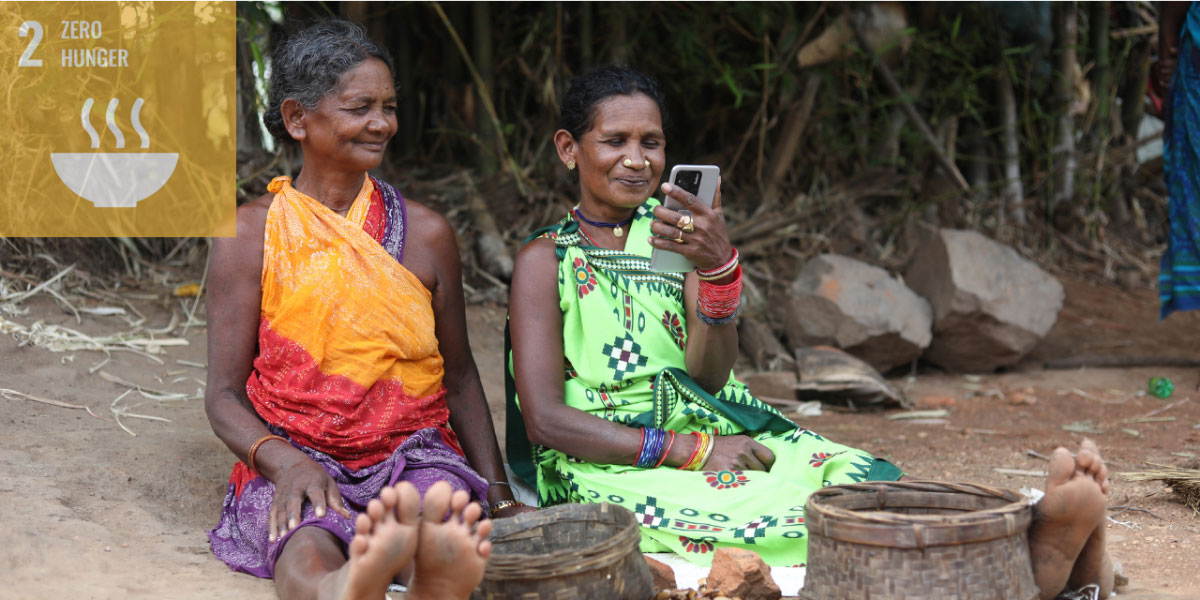
The Food and Agriculture Organization (FAO) of the United Nations marked International Women’s Day in 2023 by emphasizing the importance of giving women in agriculture access to digital technologies.
In September 2023, the New Delhi G20 Leaders’ Declaration committed to invest in inclusive, sustainable and resilient agriculture, and to promote innovation for agricultural value chains and systems by and for women farmers.
Both events signal the growing realisation that the Sustainable Development Goals of Ending Poverty (SDG1) and Zero Hunger (SDG2) are going to require empowered women agriculturists.
How Important are Women Farmers to Rural Development?
In developing countries, women make up on average 43 percent of agricultural labour, and almost 50 percent in Eastern and South-eastern Asia, and sub-Saharan Africa.
In India, women are a significant part of the agriculture sector but tend not to own the land they cultivate. In 2021-22, 62.9 percent of women workers (and 75.9 percent of rural women workers) were engaged in agriculture but only 14% had land holdings.
Growth in the agriculture sector is two to four times more effective in raising incomes among the poorest compared to other sectors, and growth in small-scale agriculture is more effective at reducing hunger and poverty than any other sector.
Although we know that empowering farmers, and particularly women farmers, is an important way to address poverty, recent Indian agricultural growth has been weak. According to the Economic Survey Report 2022-23, it fell to 3 per cent in 2021-22 and was 3.3 per cent in 2020-21. In comparison, industrial production grew 10.3% in 2020-21 and by 4.1 percent in 2021-22. India’s agricultural sector is growing slower relative to other sectors.
Increasing agricultural productivity is crucial to sustainable development but the reality is that, lacking land ownership, and with lower rates of literacy and limited access to digital tools, women need very different support and training to men.
How Does Digital Technology Help Women Farmers Increase Agricultural Productivity?
There is a particularly acute digital gender gap in India, particularly in rural areas. Even simple additions of technological solutions, such as access to information in one’s native language, can show remarkable effects.
Individuals using the Internet, by gender
(Selected Asian economics)
Data source: International Telecommunication Union, 2021
Graphic source: Observer Research Foundation
In Gujarat, the women-led Bhungroo water management system has helped more than 18,000 marginal farmers. Drought and water-logging dominates the lives of the underprivileged women farmers of the region. Bhungroo is a technology that stores excess rainfall underground and can retrieve it when water is scarce. It’s estimated that longer growing seasons have increased the typical family’s annual income from US$210 to US$700.
Solidaridad Regional Expertise Centre engages with women dairy farmers to increase their digital access and digital literacy. Women play a significant role in dairy farming and do a large amount of the labour involved, however, due to lack of resources or digital literacy, they are often excluded from formal supply chains. Solidaridad disseminated best practices, collaborated with experts to facilitate knowledge-building for these women, and also trained them on financial literacy.
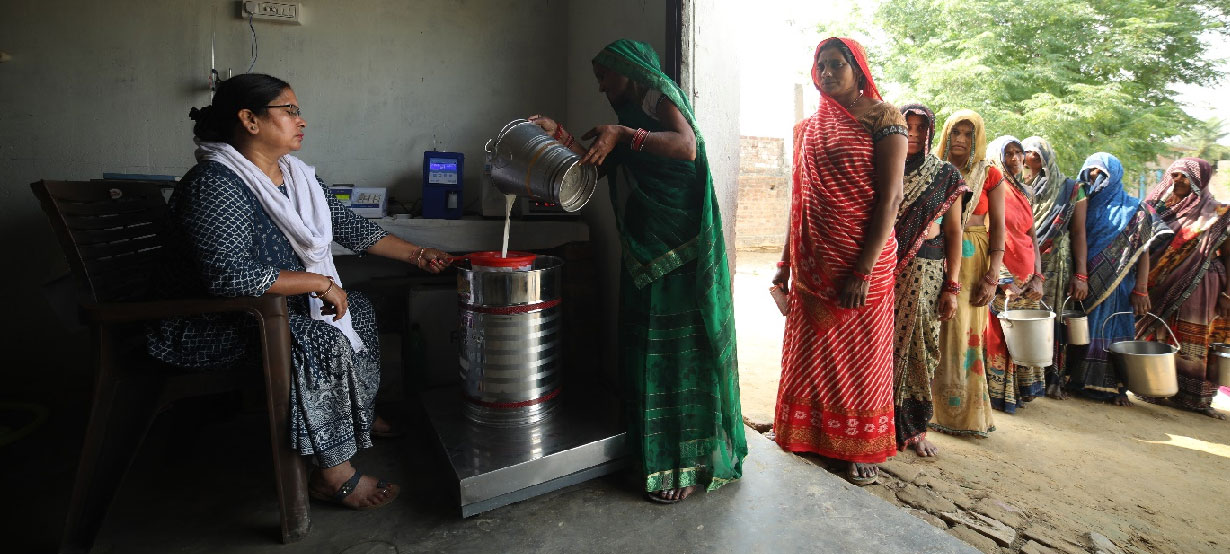
Solidaridad Facilitating Women Dairy Farmers in Uttar Pradesh
An important part of the problem is to understand that there are gendered differences in agriculture at the grassroots. Digital Farm School (DFS) is a Reliance Foundation programme which has been working to empower farmers, and address women farmers’ issues.
What is a Digital Farm School?
Digital Farm Schools are education platforms that build on the concept of the Farm Field School (which has been implemented by the FAO in several countries). Digital Farm Schools also incorporate ‘phygital’ (physical plus digital) modes and connect groups of farmers. Students gain livelihood, resilience, and improvement information from each other as well as from experts. Crucially, communication is with those who work on the farmland, and not just the owner.
Reliance Foundation’s five-year DFS initiative began in 2022-23. It is present across 15 states in India, with mostly small and marginal farmers who farm nine crops that are of importance to improve the country’s food security and national income.
The DFS communicates with farmers throughout the crop cycle, collating their queries and needs, and uses this feedback to increase their access to information through multiple communication platforms, such as voice message services, text messaging, WhatsApp groups, and physical interactions.
The use of digital modes reduces the time required to engage with the platform, as well as the cost involved, as a large part of it happens over phones, which most of the beneficiaries already have access to.
Digital Farm Schools and the Needs of Women Farmers
Throughout the geographical locations it works in, the DFS also engages with women agriculturists. The ease of access and flexibility works for women farmers. For instance, there are image and video advisories for those who have limited literacy.
I found it very difficult to manage weeds. Based on DFS’s suggestion, I opted for the Lokman, a high yielding variety of wheat, treated them with bio-fertilizer and sowed it in right time. I could arrest the spread of weeds using the recommended dose of herbicides as prescribed by experts during an audio conference. The best part of DFS is that all the information and advice is free and on time.
– Anita Singh
Raikwar village, Amarpatan tehsil, Satna district, Madhya Pradesh
One success story comes from the Balaghat district, Madhya Pradesh. The women of the Baiga tribe are largely dependent on agricultural income and daily wage labour and have less access to information than their male counterparts. In order to engage with them, the DFS programme first made contact through the Self Help Group (SHG) in Boda village. The SHG communicated specific pain points they faced, such as increasing pestilence and crop disease.
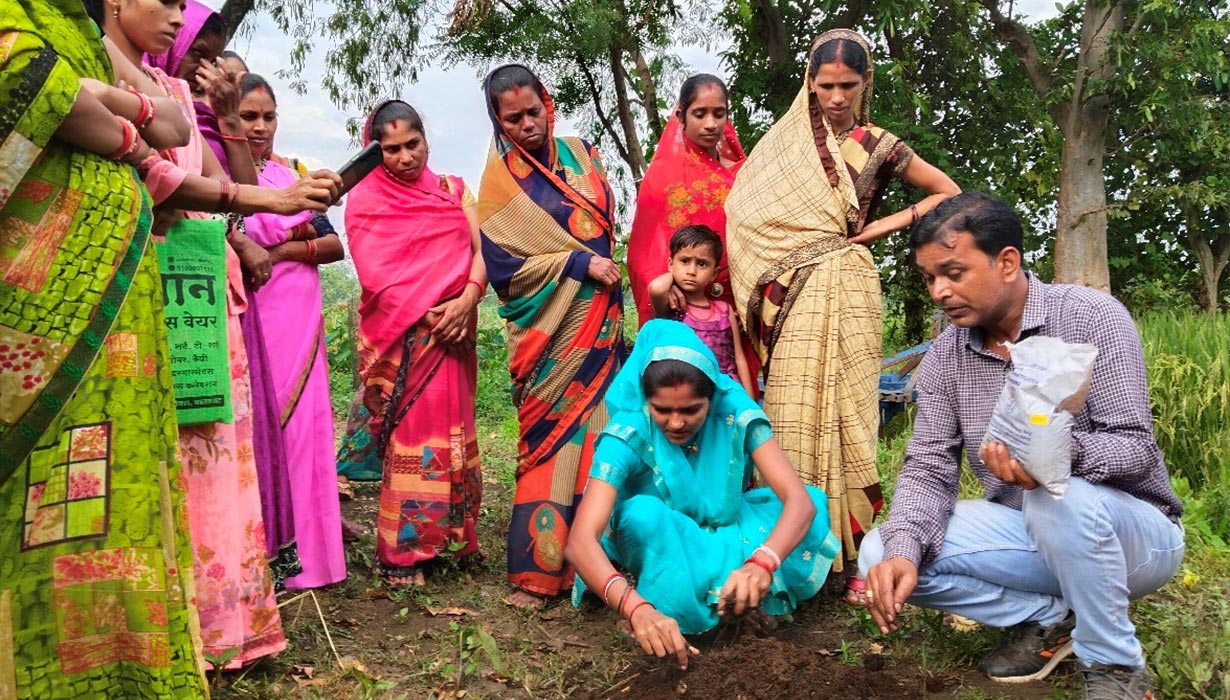
Women in the DFS Programme from Balaghat, Madhya Pradesh
151 women from 13 villages were engaged. These women received Reliance Foundation Information Services advisories and came together through a WhatsApp group. They also interacted with experts through multi-location Audio Conferences, which they could attend from their own homes.
Women Farmers and Their Micro-Enterprises
In the areas where DFS has been established, 62 percent of the households of farmers engaged in the programme own livestock and other micro-enterprises for additional income. While farming is considered the most important part of their livelihood, micro-enterprises are a significant part of their livelihood.
Management of these micro-enterprises is mainly in the hands of women. The DFS initiative engages with women specifically in these areas, providing information on kitchen gardens, livestock management, and so on.
Confluence of ideas, actions and Play-Based Learning explored at Reliance Foundation’s landmark Early Childhood Care and Education conference
- 17 April, 2024
- Mumbai
- 5 min read

- Over 200 practitioners gather at the two-day ‘Building Flourishing Futures’ conference in Mumbai, share experiences and suggest actions for better early childhood outcomes
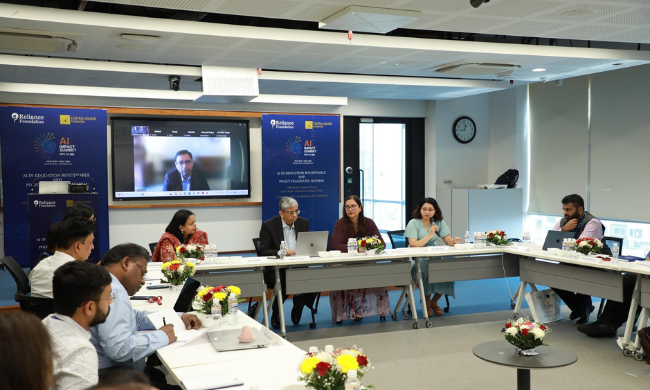
A landmark gathering of public and private practitioners spanning the Early Childhood Care and Education (ECCE) spectrum, convened to share insights and experience play-based learning at Reliance Foundation’s Building Flourishing Futures conference.
Held at the Dhirubhai Ambani International School (DAIS) in Mumbai, the conference brought together diverse practitioners from the ECCE system, academics and experts from India and internationally.
The two-day conference explored innovative practices and approaches for developing playful parents, teachers, and communities. Contributing towards the goal of universalization of ECCE as articulated in India’s National Education Policy (NEP) 2020, speakers and participants had a range of learning and educational experiences, with 10 masterclasses, 15 interactive learning stations, and 30 speaker sessions.
Showing deep involvement in the subject at the conference, Ms Isha Ambani, Director, Reliance Industries Limited and Vice Chairperson, Dhirubhai Ambani International School, was in rapt attention through the sessions, keenly engaging with experts and attending demonstrations with practitioners at various learning stations.
Key speakers included well-known practitioners Shri Sampath Kumar, IAS., Principal Secretary, Government of Meghalaya, Ms Anne Van Dam from The Learning Square, Dr Vibha Krishnamurthy from Ummeed Child Development Center, Ms Sunisha Ahuja from UNICEF and Dr Rita Patnaik, Joint Director, NIPCCD, Ministry of Women & Child Development
Experts such as from Dr Mahesh Balsekar, Consultant Paediatrician, Sir HN Reliance Foundation Hospital and Research Centre; Mr Abhimanyu Basu, Dean and CEO, DAIS; Dr Nilay Ranjan, Head - Education, Reliance Foundation also added their insights to the proceedings.
Through the two days, participants who included Anganwadi workers, teachers, principals, policy makers and representatives from philanthropies explored a burst of ideas, engaged in animated play-based learning demonstrations, discussed nuances of policies and practice, caregiving and strategies for cross-learning, towards holistic early childhood care, education and development.
Reflecting Reliance Foundation Founder and Chairperson Mrs Nita Ambani’s philosophy of ‘Happy School, Happy Learners’ educators at the Reliance Foundation schools and the Dhirubhai Ambani International School create stimulating learning environments, from the best of Indian and international early childhood learning practices. With this experience, Reliance Foundation’s vision is to help transform the Early Childhood Care and Education landscape across India, especially through building capacity of Anganwadi workers to deliver play-based learning for children from low income and marginalised communities.
Continued collaboration and innovation can build significant momentum. The ‘Building Flourishing Futures’ conference with a unique convening of diverse opinions, thoughts and good practices, aims to build a dynamic platform where practitioners learn from one another; build collaborations to develop actionable strategies within the ecosystem, leading a transformative journey, so that every child in India has the opportunity to reach their full potential, towards a flourishing future.
More Media Releases
Nurturing India’s brightest students to think big, think green, think digital: Applications invited for Reliance Foundation Postgraduate Scholarships 2023-24
- 06 November, 2023
- Mumbai
- 4 min read
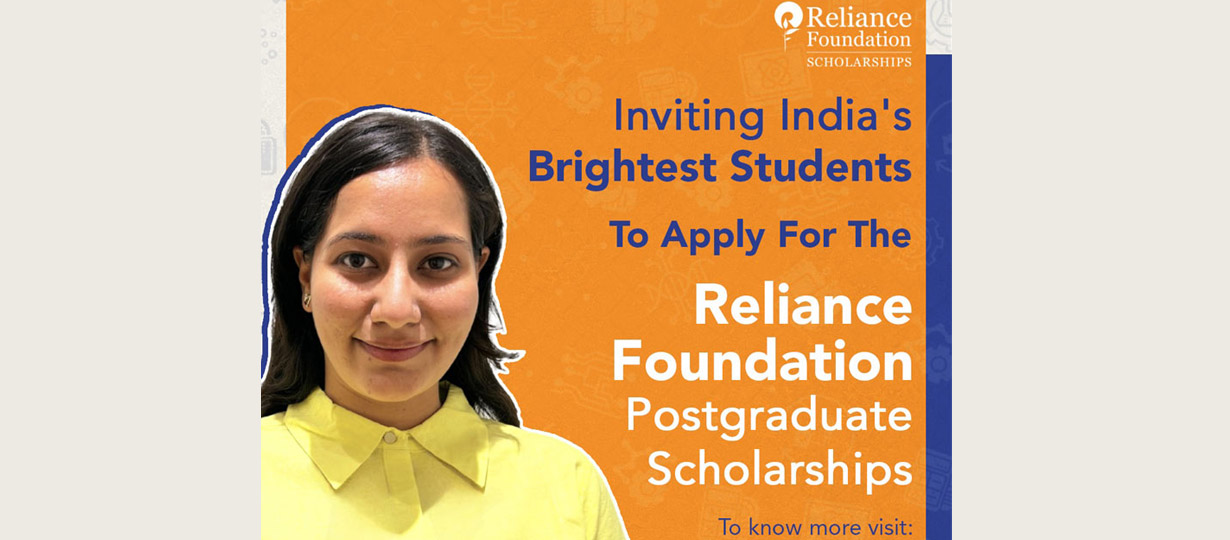
- Merit-based Postgraduate Scholarship grants up to Rs. 6 lakhs for 100 first year students of nine future-ready fields
- The Reliance Foundation Postgraduate Scholarship includes a strong development programme in addition to the grant, including sector expert interactions, industry exposure and volunteering opportunities
- Applications invited from across India. Last date to apply is 17 December 2023
Reliance Foundation is inviting applications for its prestigious postgraduate scholarships that aim to nurture world-class talent. Applications are open to first-year postgraduate students in nine fields of study that aim to reimagine and build India’s growth. Applications are open until 17 December 2023.
Resonating with the rapid advancements on technology fronts including digital, renewable and new energy, and biotechnology, the Reliance Foundation Postgraduate Scholarship aims to nurture future leaders of tomorrow who have the potential to develop new solutions and innovations in these fields for the benefit of all.
“India’s youth are well-poised to shape the nation’s progress in the era of the Fourth Industrial Revolution. The Reliance Foundation Postgraduate Scholarship will identify and empower the country’s brightest young minds who can think big, think green, think digital for the benefit of society. We aim to create a cohort of excellence every year to power India’s new era of growth,” said Mr. Jagannatha Kumar, CEO, Reliance Foundation.
Since 2020, the merit-based scholarship for excellence in postgraduate studies, has supported 178 students. Reliance Foundation Postgraduate scholars from past cohorts have embarked on professional journeys in roles that leverage technologies to drive transformation and impact for a better tomorrow. For the graduated scholars, the scholarship proved to be a platform that enriched their educational and learning experience, led them to industry-leading mentors, acquire skills and place themselves on successful career paths.
The top 100 students selected for the scholarship will be awarded a grant of up to Rs. 6 lakh for the entire duration of study along with a holistic development programme that includes expert interactions, industry exposure and volunteering opportunities. Scholars will be selected following a rigorous process that includes application evaluation, aptitude test and interviews with leading experts.
The Reliance Foundation postgraduate scholarships will identify students who can demonstrate qualities of excellence, leadership potential, integrity, community commitment, growth mindset and courage. Those first-year postgraduate students pursuing full-time courses in India in Computer Science, Artificial Intelligence, Mathematics & Computing, Electrical and/or Electronics Engineering, Chemical Engineering, Mechanical Engineering, Renewable & New Energy, Material Science & Engineering and Life Sciences are invited to apply.
For more details please visit https://scholarships.reliancefoundation.org/PG_Scholarship.aspx. The last date for submitting applications is 17 December 2023.
More Media Release
Private sector and civil society collaborate to transform education and support the Government of India’s NIPUN Bharat Mission
- 24 January, 2024
- Mumbai
- 15 min read
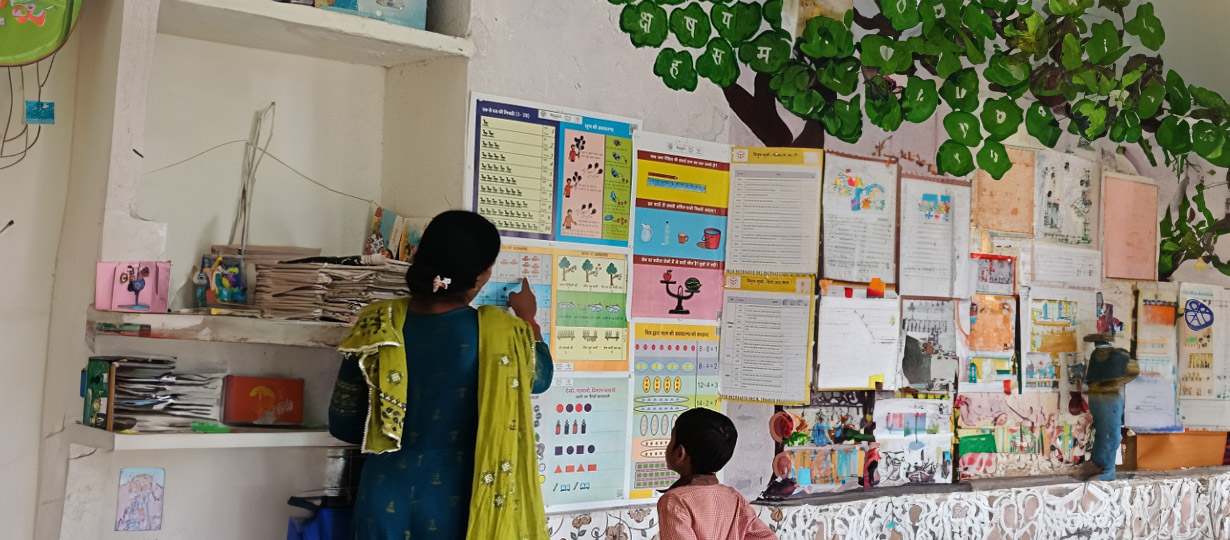
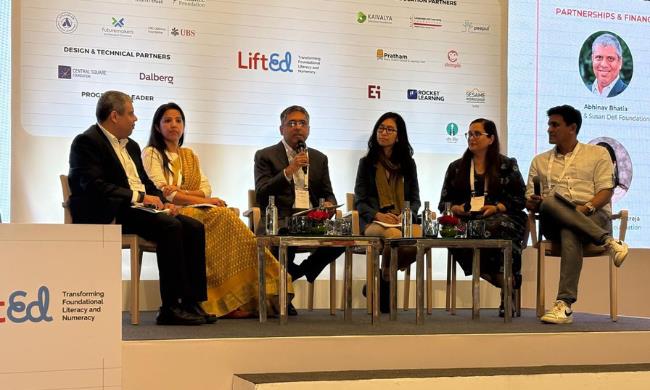
On International Day of Education, leaders across private sector and civil society have come together to launch LiftEd (Learning and Innovation in FLN to Transform Education) an initiative that will impact the lives of 4 million children in India across 5 years. With all partners working together to achieve these results, the diverse coalition that powers LiftEd is strengthening India’s education ecosystem, unlocking young India’s potential, and improving life chances for millions.
The Government of India has identified foundational literacy and numeracy (FLN) as an ‘urgent and necessary prerequisite to learning’ and in 2021, launched the landmark NIPUN Bharat Mission to equip every child aged 4-10 with FLN skills by 2026-27. Recognising that collaborative action from the private sector and civil society can act as an ‘impact multiplier’ to bolster the government’s commitment to furthering India’s education goals, LiftEd brings a vibrant and diverse mix of education experts together to improve FLN in India, raising up to USD 20 million (INR 166 crore).
LiftEd is anchored by founding partners such as Atlassian Foundation, Bridges Outcomes Partnerships, British Asian Trust, the Maitri Trust, Michael & Susan Dell Foundation, Reliance Foundation, Standard Chartered Bank, UBS Optimus Foundation, and USAID. The British Asian Trust is the programme leader and Central Square Foundation and Dalberg Advisors are design and technical partners.
Given that FLN is understood as the ability to read and understand basic text and solve basic mathematical problems by the end of grade three, it is the cornerstone on which a child’s learning journey is built. Over 5 years, LiftEd’s ambition is to strengthen these ‘building blocks’ of learning through a dual approach: on-ground and at-home interventions.
LiftEd’s on-ground education partners are working with state governments and school facilitators in five geographies (Himachal Pradesh, Haryana, Delhi NCR, Uttar Pradesh, and Bihar) to train them and build their capacity to improve FLN levels for public school children across grades 1-3. To achieve results at scale, working with stakeholders who influence education is critical and helps the education partners – Kaivalya Education Foundation, Language and Learning Foundation, Peepul, and Pratham Education Foundation – take a ‘systems change’ approach. As such, training block and district officers, school principals, and teachers enables LiftEd to positively impact more lives across a sustained period of time, as each person trained can have a ripple effect reaching several batches of students.
In parallel, LiftEd has also launched an EdTech Accelerator to develop digital solutions to improve FLN for low-income students in India. Eight innovative partners – Amira Learning, Chimple, Ei Mindspark, Pratham Education Foundation, Rocket Learning, Sesame Workshop, ThinkZone, and Top Parent – have been chosen to be a part of the EdTech Accelerator following a rigorous selection process. They are working towards developing high-quality and contextually relevant solutions focused on the bottom of the pyramid, and are receiving dedicated support in the form of mentorship, capacity building workshops, and funding through the Accelerator.
Since LiftEd is designed to incorporate principles of outcomes-based financing – collaboration, scale, innovation, and a razor-sharp focus on measurable outcomes – it puts transformational impact for children at the heart of its focus.
Quotes from the coalition of global partners:
Jagannatha Kumar, CEO, Reliance Foundation, said, "Providing children a strong start to their learning journey ensures them a bright future where they can fully realise their potential. Reliance Foundation shares this vision with all the consortium partners who have come together to launch LiftEd to foster learning and innovation in foundational literacy and numeracy. Bringing together the consortium’s collective strength and experience and aligning with the Government of India's NIPUN Bharat, LiftEd could prove life-changing for millions of children across India."
Mark Reading, Head, Atlassian Foundation, said, “We’re inspired by LiftEd because it incorporates many of the elements we believe can have an incredibly positive impact on education outcomes: a focus on impact, rather than activity, active government involvement, and the scaling of proven approaches, delivered by a first-rate team. We look forward to LiftEd and its partner organisations delivering life-changing FLN outcomes for millions of children across India.”
Amit Shah, Investment Director, Bridges Outcomes Partnerships, said, “We’re hugely excited about the potential of LiftEd. By working to improve basic literacy and numeracy skills at a systems level, we believe it can have a transformative impact on the lives of millions of children in India over the next four years, while also helping to shape the future of education in the country. LiftEd is also a great example of the power of partnerships in creating and scaling effective solutions to some of our most pressing challenges. Bridges is delighted to be able to contribute what we’ve learned from over a decade of delivering outcomes-based projects, and we’re really grateful to our partners on the SDG Outcomes initiative for helping us to bring this pioneering collaboration to life.”
Bharath Visweswariah, Executive Director India, British Asian Trust, said, "LiftEd will strengthen foundational learning skills for millions of children, setting them up for success later in life. By steering this initiative from conception to implementation and convening a coalition of experienced global partners, the British Asian Trust has created an opportunity to strengthen foundational learning in a scalable and sustainable manner. Applying our learnings from previous successes in education in India, we recognised the value of aligning with the Government of India's goals, embedding a systems-change approach and unlocking the power of technology early on."
Luke Aspinall, CEO, the Maitri Trust, said, “LiftEd aligns closely with Maitri’s strategic goals to improve primary school systems and foundational literacy and numeracy attainment, offering significant opportunity to make meaningful improvements in learner outcomes on a large scale. The initiative’s focus on systemic shifts, tying changes within the education system back to their subsequent impact on the child, could prove game changing for future systemic capacity building programmes. With ambitious targets to positively impact 4 million children, we believe joining this collaborative initiative will accelerate progress far beyond what we could achieve in isolation.”
Prachi Jain-Windlass, Senior Director, India Programs, The Michael & Susan Dell Foundation, said, “The Michael & Susan Dell Foundation is proud to partner with LiftEd consortium, which is a bold ecosystem initiative to improve and mainstream foundational literacy and numeracy outcomes in government schools. This will be the first development impact bond where the nonprofit organisations involved are achieving outcomes by building capacities in the government school system rather than implementing interventions directly. The Dell Foundation has always been supportive of such innovative projects which help the system achieve outsized impact on the lives of children. We look forward to the success of all the partners embarking on this journey.”
Karuna Bhatia, Head of Sustainability, Standard Chartered Bank India & Global Business Services, said, “As a company whose Corporate Social Responsibility (CSR) ethos includes investment in development of the regions where we operate, being a part of LiftEd is a clear pathway towards our goals. Through this unique initiative, we will strengthen foundational literacy and numeracy, identified as the highest priority of the education system by the Government of India, for millions of children across India, generating far-reaching, long-lasting impact.”
Dhun Davar, Head of Social Finance UBS Optimus Foundation and Head of Social Impact & Philanthropy, India and Middle East, said: “In our experience, outcomes-based finance can be a powerful way to improve learning outcomes for millions of school children around the world, including India. Building on a strong track record of outcomes contracts in education in India, we are delighted to come together with our partners to launch LiftEd and strengthen basic numeracy and literacy skills using both classroom-based and home-schooling tools.”
Veena Reddy, Mission Director, USAID/India, said, “Around the world, USAID supports quality education and literacy programs, paving the way for a more equitable and prosperous global future. In India, USAID partners with the government, civil society, and private sector to promote innovative and scalable solutions that will have local reach and can have global impact. USAID is pleased to support LiftEd to invest in the future of India and the world.
Shaveta Sharma-Kukreja, CEO & MD, Central Square Foundation, said, "LiftEd resonates closely with CSF's core mission to improve FLN outcomes at scale in India, both in schools and at home. A key component of LiftEd is nurturing the development of high-quality EdTech solutions through the EdTech Accelerator. Among the numerous EdTech organisations in India, only a small proportion focus on foundational learning, and even fewer are built for low-income users. The LiftEd Accelerator adopts a unique approach to solving this by catalysing the supply of diverse, innovative EdTech solutions and by galvanising demand for at-home learning, hence meaningfully contributing to achieving NIPUN Bharat's learning goals."
Dayoung Lee, Partner, Dalberg, said, “While the pandemic exacerbated India’s learning crisis, there is now an extraordinary window of opportunity to accelerate outcomes on foundational learning through the government’s NIPUN Bharat Mission. LiftEd rides on this momentum to scale effective school-based solutions and innovative home-based EdTech solutions. Dalberg is excited to be a part of this ambitious initiative – unprecedented in raising the stakes for outcomes while working through government systems. I believe it is our best shot at achieving impact at scale.”
Partners at a glance
Founding partners
Atlassian Foundation, Bridges Outcomes Partnerships, British Asian Trust, the Maitri Trust, Michael & Susan Dell Foundation, Reliance Foundation, Standard Chartered Bank, UBS Optimus Foundation, and USAID.
Design and technical partners
British Asian Trust (Programme Leader), Central Square Foundation, Dalberg Advisors
Education partners
On-ground: Kaivalya Education Foundation, Language and Learning Foundation, Peepul, Pratham Education Foundation At-home: Amira Learning, Chimple, Ei Mindspark, Pratham Education Foundation, Rocket Learning, Sesame Workshop India, ThinkZone, and Top Parent
Evaluation partners
On-ground: ConveGenius Insights, Development Solutions
At-home: Educational Initiatives, Sambodhi, Prof Tarun Jain (IIM Ahmedabad), Principal Investigator on the EdTech Accelerator evaluation studies
More Media Releases
Giving wings to 5,000 more dreams: Reliance Foundation UG Scholarships 2023-24 results announced
- 09 February, 2024
- Mumbai
- 4 min read

- Over 58,000 applications from students in 5,500+ educational institutions
- Diverse cohort of scholars from all streams of study selected on merit-cum-means basis for one of India’s largest, inclusive and diverse higher education scholarships
- Selected first-year UG students will receive grants of up to Rs. 2 lakh over the course of their study, become part of a strong capacity-building programme and a vibrant alumni network
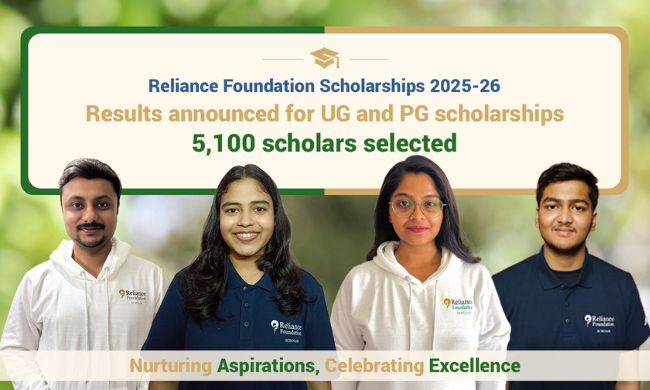
Five thousand students have been selected from a country-wide application pool for the Reliance Foundation Undergraduate Scholarships 2023-24, results for which were announced today. The scholarship, one of India’s largest, inclusive and diverse scholarship initiatives for higher education, awards undergraduate students a grant of up to Rs. 2 lakh and an opportunity to be part of its vibrant and enabling alumni network.
Across 35 states and UTs of India, 58,000 students studying at more than 5,500 educational institutions had applied for the scholarships. The final 5000 have been selected through a systematic merit-cum-means process. In addition to their performance in the aptitude test and their Grade 12 marks, 75% of the selected students have an annual household income of less than 2.5 lakh rupees.
To know the outcome of their application, applicants can visit https://reliancefoundation.org/ugscholarships_2023-24_results.
The Reliance Foundation Undergraduate Scholarships aim to support students in any stream of study to lift themselves, their communities and contribute to India’s future socio-economic development. It selects students on merit-cum-means basis and enables them in continuing their undergraduate studies without financial burden.
As part of its overarching vision for education, excellence and innovation, Reliance Foundation is constantly intensifying efforts to ensure the selection of a strong, diverse, merit-cum-means cohort of undergraduate students, unlock the potential of youth and take the nation to greater heights. Till date, over 23,136 student scholarships have been awarded, out of which 48% are girls and 3,001 are students with disabilities.
This year’s cohort includes students from all subject streams including Commerce, Arts, Business/Management, Computer Applications, Science, Medicine, Law, Education, Hospitality, Architecture, Engineering/Technology and other undergraduate degrees.
Reliance has been awarding scholarships since 1996. Strengthening this commitment in December 2022, on the 90th birth anniversary of Reliance’s Founder-Chairman Shri. Dhirubhai Ambani, Mrs Nita Ambani, Reliance Foundation Founder & Chairperson, announced that Reliance Foundation will award 50,000 scholarships over the next 10 years. This announcement on the 5000 selected scholars for 2023-24 takes forward Reliance’s consistent commitment to education and nurturing students towards building India’s future.
More Media Releases
Reliance Foundation partners with National Skill Development Corporation to impact half a million youth
- 15 February, 2024
- New Delhi
- 4 min read
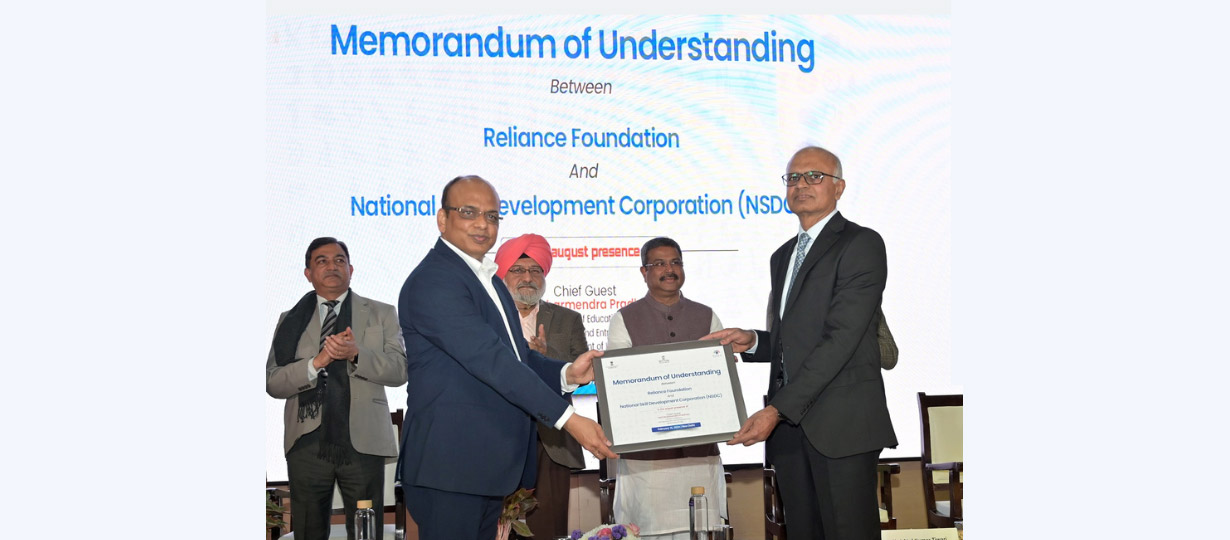
- Over the next three years, 500,000 youth will be impacted with this partnership.
- State-of-the-art courses for future skills will be developed through this partnership.
Reliance Foundation and the National Skill Development Corporation (NSDC) have entered into a strategic partnership to create courses with future-ready skills for 500,000 Indian youth. This partnership entails the development of curriculum focusing on creating capacity for the youth in fields including EdTech, cybersecurity, artificial intelligence (AI), environmental sustainability, policy analysis and much more. With the help of Reliance Foundation’s digital-forward approach, this partnership is expected to garner popularity among youth interested in newer career avenues that require futuristic thinking.
Speaking on the occasion, Shri Dharmendra Pradhan, Union Minister for Education and Skill Development and Entrepreneurship, said, “India will become unstoppable by embracing the mantra of skilling, re-skilling and up-skilling. Various digital initiatives in the skilling ecosystem are ensuring Skills Anywhere, Skills Anytime and Skills for All. As India marches towards becoming a developed nation, by leveraging technology, scale and sustainability, Indian workforce will meet not only domestic demand, but also global demand and set new benchmarks.”
Emphasising the importance of this strategic partnership, Mr. Jagannatha Kumar, CEO, Reliance Foundation, said, “India has the largest youth population in the world, and this is our effort to prepare them with future-ready skills. At Reliance Foundation, we believe that this will help in fulfilling their aspirations and achieve their goals. This partnership with NSDC will help youth in skilling, to align competencies with evolving work profiles and opportunities. Reliance Foundation and NSDC bring a common vision and purpose along with our unique strengths, to contribute to our youth.”
Designing and development of high-quality curriculum; setting up student services; training of trainers; supporting collaborations; AI aided online assessments; certifications and industry aligned placements are an integral part of this partnership.
Reliance Foundation has been working on creating and enhancing livelihoods with opportunities for the marginalised and youth. This partnership with NSDC is yet another step in that direction.
About NSDC
Giving boost to Indian Government Skill India Mission, NSDC, a nodal skill development agency, working under the Ministry of Skill Development & Entrepreneurship (MSDE), Government of India, is a unique Public Private Partnership (PPP) that aims to catalyze the creation of a large and quality vocational training ecosystem in India. Since inception, NSDC has trained over three crore people in different sectors through its collaboration with training partners pan India. NSDC has established 37 Sector Skill Councils (SSCs) and implements the Government’s flagship skill development schemes such as Pradhan Mantri Kaushal Vikas Yojana (PMKVY), National Apprenticeship Promotion Scheme (NAPS), among others. NSDC also funds enterprises, companies and organizations that provide skill training. The organization enables private-sector capacity building in skill development by offering concessional loans, other innovative financial products, and strategic partnerships. For more information, please visit at https://nsdcindia.org
More Media Release
Skilling
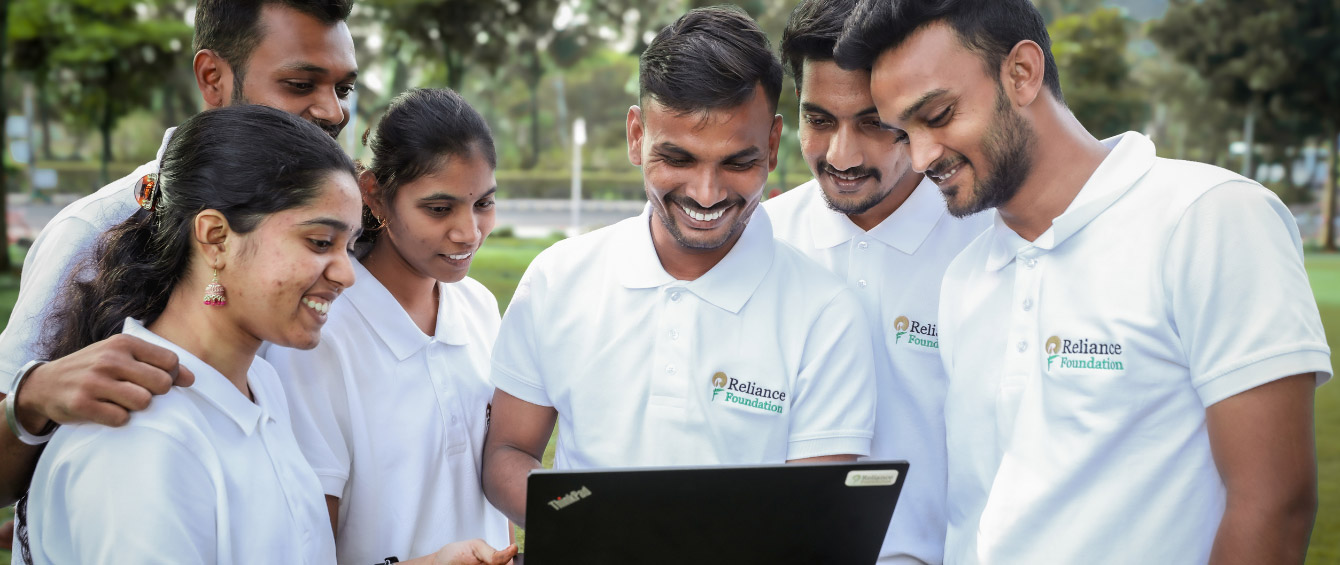
Skilling and knowledge-building are key drivers of economic growth and social development. With India being home to one-fifth of the world's youth population, skilling youth is central to realising our collective aspirations. India’s young people need to remain relevant, future-ready and agile in today's rapidly evolving world while having equal access to opportunities to shape their futures and that of the nation, no matter where they come from.
Reliance Foundation’s Skilling Programme equips youth with the right skills and connects them to opportunities, acting as a catalyst for their career growth.
The programme goes beyond just imparting skills; it shapes competent and confident individuals, preparing them for success and excellence in their chosen area of work. Notably, the programme has enabled several young people from marginalised backgrounds to find meaningful employment and build their lives.
The skilling programme encompasses initiatives that target youth with varying educational and skill competencies.
Reliance Foundation Skilling Academy
To address the ongoing challenges of the youth, Reliance Foundation is committed to launching comprehensive initiatives that offer industry-relevant skilling. These programs equip young people with both hard and soft skills essential for thriving in today’s evolving job market.
In 2024, the programme took a significant step forward with the adoption of a digital delivery model through the Reliance Foundation Skilling Academy, a platform dedicated to preparing India’s youth with skills relevant to jobs of the future.
The platform quips youth with essential skills for current and future industries through self-paced courses, complemented by personalised mentorship to help individuals navigate their career landscape with expert insights. Further, it also connects individuals with relevant job opportunities, offering support at every step — from resume building to recommendations — facilitating continuous career advancement.
Future-Ready Skills
The Future-Ready Skills initiative leverages Reliance Foundation’s partnership with the National Skill Development Corporation (NSDC) to offer youth in higher education institutes state-of-the-art courses in fields such as Artificial Intelligence, Robotics, Cybersecurity Environmental Sustainability, Policy Analysis, and more. Through this initiative, Reliance Foundation envisions a future-ready India, where technology and education converge to sculpt tomorrow’s leaders.
21st Century Skills
The 21st Century Skills initiative enables youth to embark on careers in BFSI, logistics, Hospitality, and other sectors after empowering them with problem-solving, digital literacy, communication, financial, and other skills essential in the present day.
Through its Skilling Programme, Reliance Foundation is committed to empowering India's youth. By facilitating access to quality education, skill development, and employment opportunities, it is not only helping young individuals secure a better future but is also contributing to the economic growth and social development of the nation.
Beyond access: Strengthening playful learning at home in the post-pandemic era
 Antara Sengupta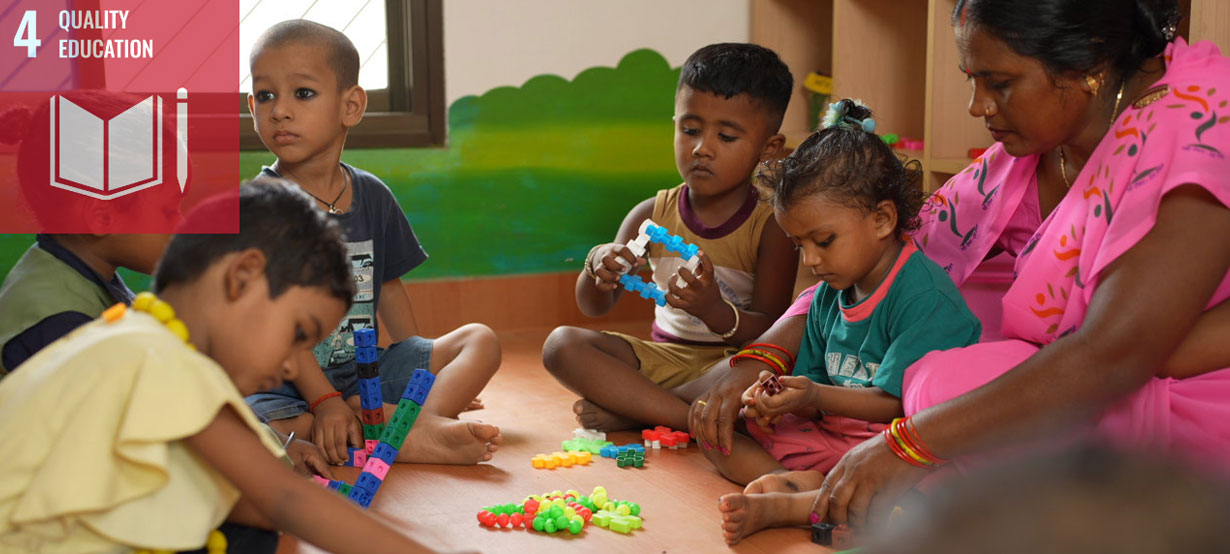
While several educational institutes experimented with digital education to improve access during the pandemic, children are now back to school. The importance of playful learning is well established, especially for Early Childhood Education (ECE). As experts point out, children learn about “social norms, roles and responsibilities, and language through curiosity-driven, playful interactions and activities.” Given that at this age, children spend most amount of time at home or with caregivers, they need to interact with the child, which, according to science, helps trigger neural connections and strengthens child brain, stimulating social and communication skills. Several studies have demonstrated that play-based learning is significantly more effective than traditional forms of teaching.
While ECE, like any other stage of education, was significantly impacted due to COVID-19, several organisations innovated with available technology to strengthen play-based learning, involving parents and communities. In India, ECCE is delivered through one of the world’s largest early childhood programme called Integrated Child Development Services Scheme (ICDS), through a network of 13,99,697 Anganwadi centres. A study (as also cited in the publication Ideas, Innovation and Implementation: India’s Journey Towards the SDGs) by the Centre for Early Childhood Education and Development (CECED), Ambedkar University Delhi (AUD) between 2011-2016 recommends play-based learning and experiences to help develop early literacy and numeracy skills at the foundational stage. It noted that children’s school readiness at age five in India is far below expected levels, hence there is a need to bridge the gap and provide age-appropriate pedagogies, activities as well as teaching material to help teachers overcome these challenges.
Tech toys: Using play-based digital tools to enhance foundational skills
During the pandemic, several prominent as well as smaller organisations experimented with tech-based innovations to enhance access to education for children. While using technology to enhance learning was the need of the hour, it was also important to be mindful of the fact that the technology is easy to use and understand for young children, as well as parents who would have to assist their children in efficiently using the technology.
In fact, studies show that parental engagement in a child’s learning is pivotal to help children engage with these technologies. According to a study conducted by the Lego Foundation, “Play with digital technologies supports children’s acquisition of knowledge and skills” – enhancing their digital skills, subject knowledge and holistic skills. Perhaps gamification of teaching materials has hence come up as a favourable solution to several Ed Tech companies that are catering to this age group.
Case of Bal Raksha Bharat: Going back to basics
However, digital play can sometimes be through the simplest game or device. As also demonstrated in the book Ideas, Innovation and Implementation, some organisations like Bal Raksha Bharat (also known as Save the Children) used basic and simple technology to reach children as well as involve parents. They initiated a programme called ‘Back to Basics’, which aims at improving the child’s learning experience both at the Anganwadi centre and home, to ensure effective transition from pre-school to Grade 1.
In collaboration with various State and Central government departments, this initiative developed and used audio-video modules for early learning. Under this initiative, Anganwadi workers and teachers are being trained in learning through activity and play-based methodologies to improve quality of the learning process. Besides, to include parents and caregivers in this learning process, during the pandemic, the organisation introduced 60 easy-to-follow instructions through audio-visual aids disseminated through WhatsApp called ‘Gulmohar’. This AV module is meant for the parents as a hands-on learning tool to develop activities for children at home, based on the child’s interests and skills.
Additionally, to reach additional children, Bal Raksha Bharat also launched ‘Story Ghar,’a low-cost digital compendium of 450 stories that was broadcasted on All India Radio in the Indian states of Jharkhand, Rajasthan and Karnataka to provide interesting content to children. The AV aids under Gulmohar were developed with support of the caregivers from the community and disseminated through a platform that is widely used by the community.
The project has had significant impact on the way AWWs and teachers use child-centric methods of early learning. AWWs and teachers’ perceptions towards activity-based learning has improved, and one can see a change in trend towards the uptake of early learning activities in early 2020 (during the baseline study) vs in late 2022 (during the endline study). The key stakeholders have attributed the trainings, capacity building, innovative content as well as consistent on-site support for the impact figures.
Aligned to the findings of the endline study, the study by Lego Foundation also recommends teachers using a various form of approaches around the use of technology and ensure continuity between free play and instruction-based activities. Moreover, the study also states that innovation with technology in play should include children at the development stage as more autonomy over the process helps stimulate their critical skills such as collaboration, critical thinking, communication, and problem-solving.
To read more about Bak Raksha Bharat’s Back to Basic programme, refer to Ideas, Innovation and Implementation: India’s Journey towards the SDGs, which showcases 17 lighthouse initiatives from India that are contributing towards the achievement of the 17 SDGs.
The way forward
Bal Raksha Bharat’s uniqueness also comes from the way the programme has been designed in a collaborative manner – involving the government and district departments, other key stakeholders as well as has been done in alignment with the goals of the National Education Policy (NEP) 2020 of India. To target SDG 4 of equal access to education for all, it is important to undertake a holistic approach to development:
- Collaborate extensively and utilise the strengths of the existing governance mechanisms, to be able to effectively implement and scale solutions in a country with a large population.
- -The goals and visions of development programmes need to be aligned to the national development goals so as to ensure that all efforts are leveraged towards achieving of the similar set of ambitions.
In this context, another initiative called the ‘Back-to-School’ Ed Tech outcomes fund and accelerator is helping support and mentor organisations that are working towards ensuring access and quality of education for young children at home or for their remote learning. The Accelerator will promote access to and use of high-quality and contextually relevant edtech solutions in foundational literacy and numeracy (FLN) to encourage at home learning – aligned with government’s FLN mission.
Further, the Brookings Institute’s Centre for Universal Education collected a compendium of nearly 3,000 tech-based innovations that are facilitating ‘Leapfrogging in Education’. In 2019, a study by the Deloitte Global and the Global Business Coalition for Education had predicted that “half of all youth around the world entering the workforce in 2030 will lack basic secondary-level skills they need to thrive—from literacy and numeracy to critical thinking and problem solving.” Since then, the pandemic has further slowed the progress the world was making on this SDG.
Hence, there is a need to accelerate this progress through simple innovations that are time and cost-effective, engages the end users as well as are easy to use and implement. As the UN General Assembly deliberated its progress on the development goals, some ideas and innovation need immediate implementation to that beyond 2030 the progress becomes the foundation for further improvement in the pace and process of achieving an equitable world for all citizens of the world.
Scholarships by Reliance: Impact study observes multiplier effect
 Team Reliance Foundation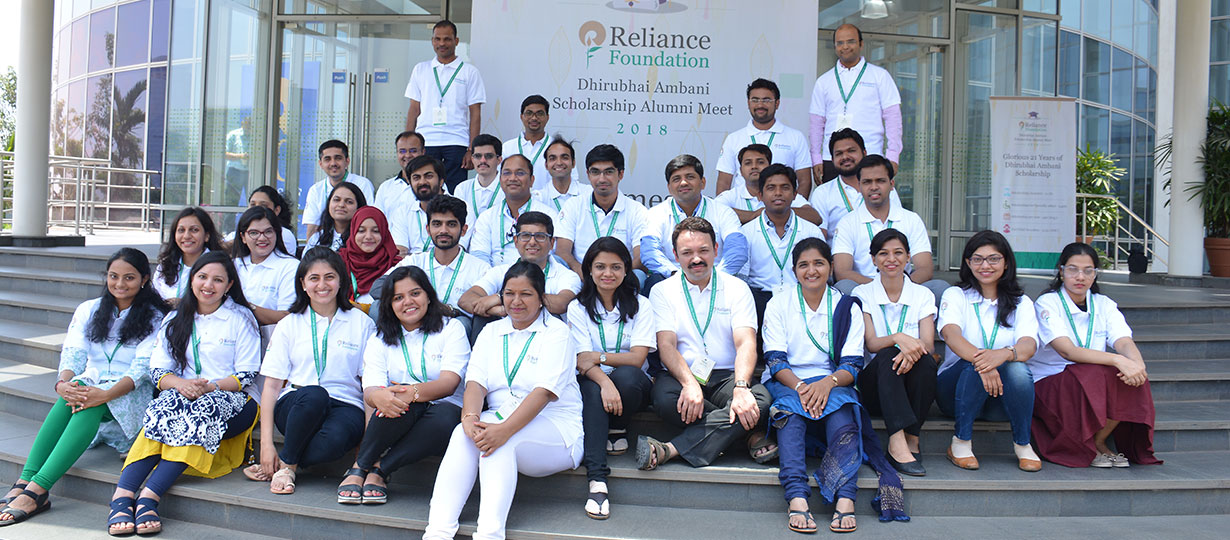
An evaluation of scholarships provided by Reliance through the years, found that beyond immediate individual scholar impact, there has been multiplier effect at a household, organisation and societal level.
Reliance has been providing scholarships to meritorious students through Dhirubhai Ambani Scholarship (DAS) since 1996 and through the Reliance Foundation Scholarships from 2020-21. A study was conducted by 4th Wheel Social Impact between March and June 2022, with focus on understanding the impact of the DAS programme on scholars supported between 2015 and 2020.
Guided by Reliance Founder-Chairman, late Shri Dhirubhai Ambani’s belief that the best way to ensure the nation’s progress is to invest in its youth, the Dhirubhai Ambani Scholarship programme supported meritorious students of standard XII to pursue college education in the stream of their choice.
Top ranking students of Central Board of Secondary Education (CBSE) and State Boards across 28 states and 5 Union Territories are identified based on need and provided financial support over the course of three years. Funds cover tuition fees and costs related to transport, accommodation, books, stationery, and various other allowances needed for the duration of graduation. Since inception, there have been 12,737 DAS recipients with equal gender ratio, including 2,755 specially abled scholars representing over 20 percent of the total scholars supported by this programme.
A total of 946 respondents (527 scholars and 413 parents), along with DAS team members and representatives from State and CBSE Boards participated in the study that included a mixed methods approach. Quantitative information and qualitative inputs were gathered through surveys and semi-structured interviews.
The study found the following:
Impact on Scholars
The scholarship is highly relevant for scholars who are from economically vulnerable backgrounds and for females, who report much higher probabilities of dropping out of education without scholarship support. The programme reduces the financial burdens faced by scholars and their families and enables them to pursue higher education in streams and colleges of their choice and move to bigger towns and cities without heavy debts incurred.
Being recipients of the DAS scholarship has very positive impacts on their own self-esteem, confidence and aspirations, and strengthens their academic and professional profiles. The scholarship has enabled scholars to pursue higher education and get good jobs. Through access to higher education and studying in good institutions they are exposed to varied education and career opportunities, have higher academic performance and get access to a strong support system and network of teachers, staff, mentors, and peers. A large proportion of scholars pursue medical and science related degrees signifying DAS’s support to creating skilled professionals across crucial sectors of the country.
- 72% respondents said they have improved academic performance
- 75% respondents said they have experienced increased aspirations
- 97% respondents said they were motivated to work harder in academics
Impact on Female Scholars
- 78% female respondents reported that the scholarship raising their education and career aspirations
- 22% female respondents felt without the scholarship they would not be able to study in thecollege/university
Impacts on Households
Many scholars represent a success story among their families and communities signifying how education leads to upward economic mobility and job stability. The programme supports scholars to pursue higher education, get good jobs and contribute to their household incomes. Scholar salaries are a stable source of income and form a significant proportion of overall household incomes. It creates upward economic mobility of scholars hailing from financially vulnerable backgrounds, where parents work in agriculture or the unorganised sector. Scholar salaries support an improvement in ownership of assets, sibling education, and better quality of life.
- 87% contribute to household income
- 25% support sibling education
- 61% bought assets
Organisational Impacts
Even though scholars are at a very nascent stage of their careers: in managerial or executive roles, results are very heartening with several scholars having contributed to innovations, product and service development within their organisations. Since the scholarship supports meritorious students, it is certain scholars go onto make great strides in their professional lives, and contribute to organisational successes in terms of innovations, awards and accolades.
- 36% improved organisational processes and functions
- 17% contributed to new service development
- 11% developed new innovative product
Community Impacts
Scholars gain increased confidence, admissions in good education institutes and get access to enhanced opportunities which enables them to partake in extra-curricular activities and be involved with social change endeavours. They are part of community groups like college clubs, welfare and charity groups, National Cadet Corps and professional support groups. Many hold leadership positions within these groups and at their colleges and workplaces. Scholars have contributed to social change by volunteering at NGOs and working closely with community issues like women empowerment, education, de-addiction drives, waste management and cleanliness, health and hygiene awareness, etc. Scholars showcase high levels of gratitude towards the DAS support and exhibit strong interests to contribute back to society by guiding or mentoring students like themselves and participating in alumni networks. While they are provided with these platforms at a university level, their engagement and involvement with societal change endeavours reduce when they enter the job market. For this sustained involvement it is crucial to provide them with alumni networks and platforms to pay it forward to the next batches of scholars after them.
- 20% of the respondents contributed to social change
- 10% of the respondents said that they are part of community groups
- 8% of the respondents contributed to programmes and policy changes
In 2020, Reliance Foundation launched the ‘Reliance Foundation Scholarships in Artificial Intelligence and Computer Sciences’ to achieve a deeper impact in the field of frontier sciences and engineering that are playing a key role in shaping India’s future.
In 2022, Reliance Foundation enhanced its commitment to India’s youth to support 50,000 students with scholarships over the next 10 years, aiming to nurture talented youth from across the country who have the potential to drive the nation’s future success for social good.
For 2022-2023, Reliance Foundation is awarding Undergraduate Scholarships to support up to 5,000 meritorious undergraduate students based on a merit-cum-means criteria for their undergraduate college education, empowering them to continue their studies without financial burden, and 100 of India's brightest postgraduate students studying eligible subjects in new technologies through the Reliance Foundation Postgraduate Scholarships. As scholarships have a great potential to nurture and empower meritorious students, Reliance Foundation believes that this approach will create robust, vibrant and engaged young professionals, who drive India’s growth.
Click here to know more about the Reliance Foundation Scholarships.
