A Community Leader Advancing Nature-Based Solutions
 Team Reliance Foundation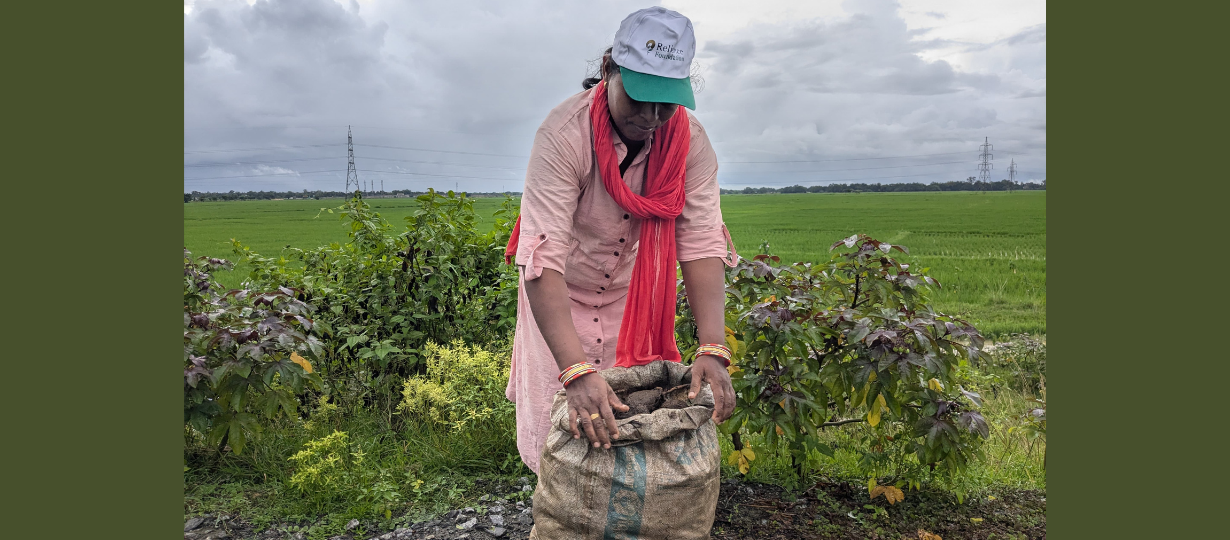
Mrs Binapani Mangal, a grassroots volunteer from Akhuapada village in Nerada Gram Panchayat of Bhadrak district, has emerged as a committed changemaker through her active engagement with Reliance Foundation’s disaster risk reduction initiatives.
Located close to the Baitarani River, her village is highly flood-prone and increasingly vulnerable to the impacts of climate change. Seasonal flooding, river overflows and extreme weather events are recurring realities for the community. These challenges have strengthened Binapani’s resolve to work towards resilience and environmental protection.
Over the past two years, she has played a pivotal role in advancing Nature-based Solutions in the district, particularly through palm conservation efforts. Reliance Foundation’s palm seed plantation drives aim to strengthen coastal and riverine resilience and contribute to lightning hazard risk reduction, in line with guidance from the Odisha State Disaster Management Authority (OSDMA).
Binapani has been at the forefront of these initiatives, leading and supporting plantation drives across five Gram Panchayats in Bhandaripokhari block. During this period, she has contributed to the plantation of more than 10,000 palm seeds. Through sustained community mobilisation, she has engaged PRI members, youth volunteers and local residents, while raising awareness about the importance of palm conservation as a long-term resilience measure.
Beyond plantation efforts, Binapani has participated in several Reliance Foundation programmes focused on climate-resilient livelihoods, strengthening her understanding of sustainable practices and community preparedness.
Her journey underscores the power of community-led action in building disaster resilience and fostering environmental stewardship in vulnerable regions — demonstrating how local leadership can drive lasting, nature-positive change.
Creating Change Through Public Health Risk Management Training
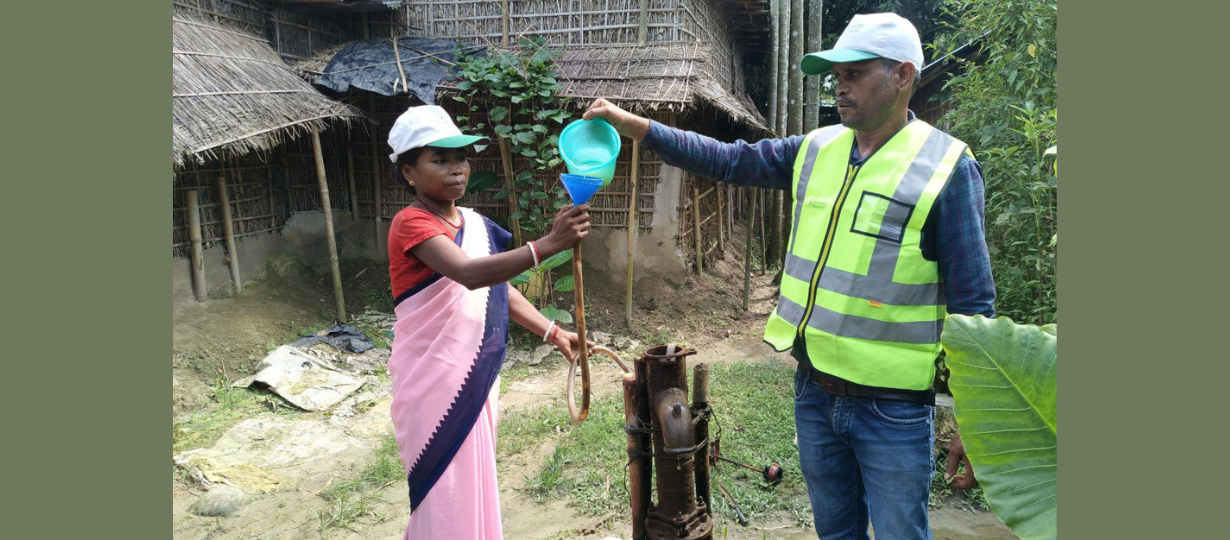
In the vulnerable Palasi block of Araria district, access to safe drinking water continues to be a critical public health concern. Recognising the risks posed by unsafe water and poor sanitation practices, Reliance Foundation conducted a Public Health Risk Management Training focused on hygiene promotion, safe drinking water practices and water source disinfection.
Meena Devi, an ASHA worker from Khutti village in Sohandar Panchayat, participated in this hands-on training. The programme strengthened her capacity to identify public health risks, promote safe water handling, demonstrate household-level water treatment methods and support the prevention of water-borne diseases.
Following the training, Meena Devi has been actively engaging community members through household visits and small group interactions. She regularly demonstrates simple and practical techniques for water purification and safe storage, while counselling families on hygiene practices. Her consistent outreach has helped shift long-standing behaviours and improve awareness, particularly among women and children.
By strengthening the capabilities of frontline health workers, Reliance Foundation’s intervention has translated knowledge into action — fostering community-driven behavioural change and enhancing public health resilience at the village level.
Strengthening Livestock Protection in Emergencies
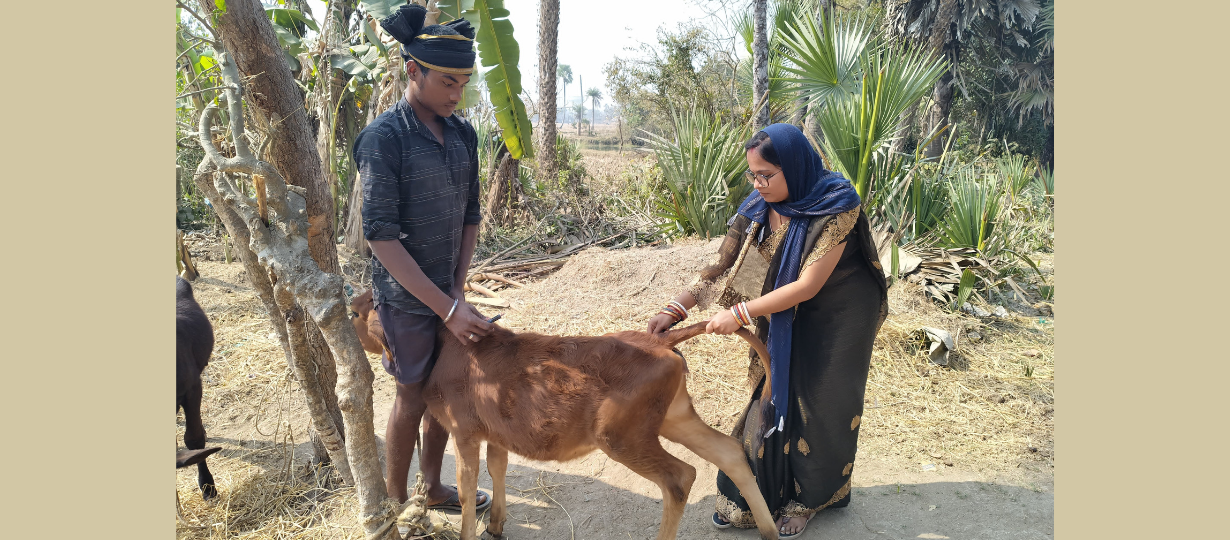
Sasmita Pradhan, a 29-year-old grassroots professional with a Master’s degree, has been actively supporting livestock-based livelihoods in Tihidi block of Bhadrak district. Since July 2025, she has been serving as an A-HELP (Accredited Agent for Health and Extension of Livestock Production) with the Livestock Department. Prior to this, she worked for nearly four years as a Pranimitra, closely engaging with farming households and gaining deep insight into the everyday challenges faced by livestock-dependent communities.
In December 2025, she participated in a Training of Trainers (ToT) programme on Livestock Protection in Emergencies, facilitated by Reliance Foundation in coordination with the Livestock Department, Bhadrak. The training proved transformative in strengthening her technical and practical knowledge. It covered key areas including disaster risks to livestock, evacuation planning, early warning systems, emergency feed and fodder management, vaccination and deworming protocols, as well as the Participatory Response Identification Matrix (PRIM).
Following the training, Sasmita has been actively collaborating with Reliance Foundation to generate awareness on livestock protection and support vaccination drives within the community. She has also initiated the cultivation of Napier grass and promotes green fodder practices among farmers to enhance fodder security during emergencies.
With six livestock of her own, the training has strengthened both her professional engagement and personal preparedness. By translating knowledge into action, Sasmita continues to support vulnerable households in safeguarding their animals and sustaining livelihoods during times of crisis — reinforcing the importance of preparedness-led resilience at the community level.
Andhra Pradesh Chief Minister Shri N Chandrababu Naidu commends Reliance Foundation for efforts during Cyclone Montha
- 01 November, 2025
- Vijayawada
- 4 min read
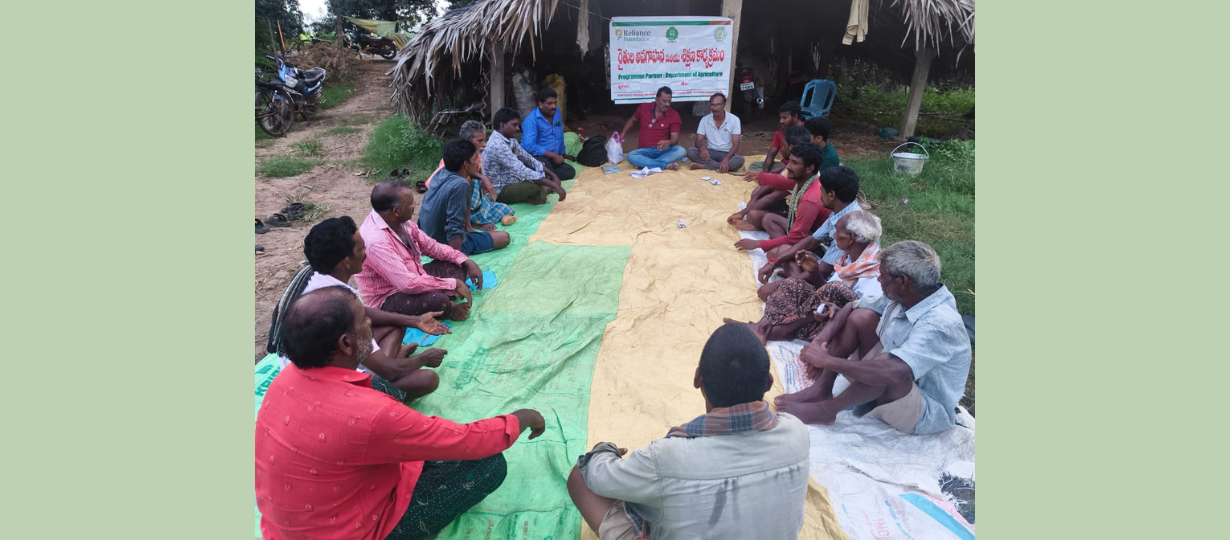
Vijayawada, November 1, 2025: Andhra Pradesh Chief Minister Shri N Chandrababu Naidu recognised Reliance Foundation today for its contribution to protecting vulnerable communities and reducing economic losses during Cyclone Montha.
Reliance Foundation alerts vulnerable communities to cyclones, floods, and other hazards to safeguard lives and livelihoods. As Montha approached Andhra Pradesh’s coast, working with the state’s Fisheries and Agriculture departments, AP State Disaster Management Authority, INCOIS, and IMD, Reliance Foundation disseminated alert messages and precautionary advisories in a timely manner starting October 25, three days ahead of the storm’s landfall.
Felicitating all entities who contributed to minimising the impact of the cyclone, the Chief Minister detailed the state’s five-point action plan, terming it a successful demonstration of team work and effective use of advanced technologies. Reliance Foundation’s representative N Chitti Babu received the ‘Cyclone Montha Fighter’ commendation along with representatives of other organisations at a state event organised on Saturday.
As part of its efforts during the cyclone, Reliance Foundation reached 1.65 lakh farmers and marine fisherfolk, including many already at sea, with specific information about the cyclone’s approach, wind and sea conditions. This was accompanied by targeted mobile-based advisories to fisherfolk in the cyclone’s path to help them return to the shore and secure their boats, nets, and other assets. To mitigate crop damage, advisories were sent to farmers before and after the storm with crop protection measures.
Precautionary information, including recommendations to evacuate to safer locations, was also disseminated among the wider coastal community through multiple means, including on-ground interactions, voice messages and WhatsApp. A toll-free helpline that was operated 24/7 to provide real-time information responded to over 600 calls during October 26 – 28.
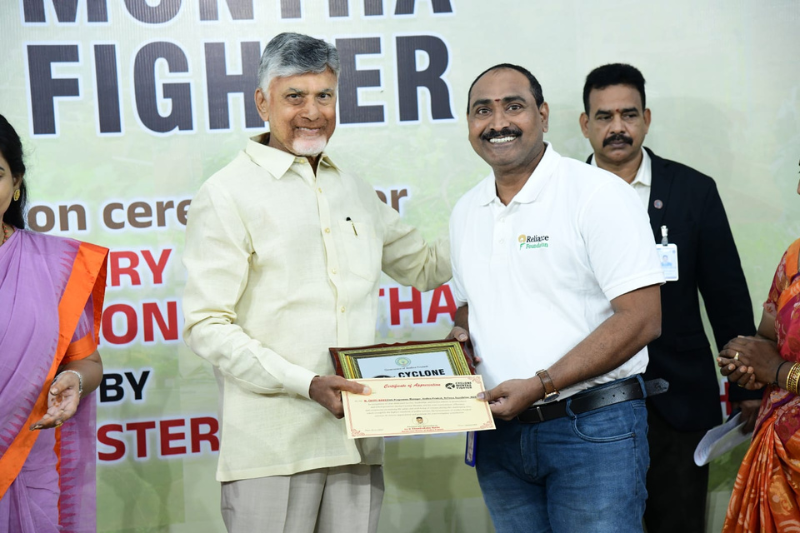
Andhra Pradesh Chief Minister Shri N Chandrababu Naidu felicitates Reliance Foundation for contributions during Cyclone Montha relief efforts.
Committed to the well-being of rural communities across India, Reliance Foundation has been disseminating critical information during emergencies to prevent loss of lives and livelihoods for more than a decade, working closely with multiple stakeholders, including the communities, and leveraging digital technology for the common good.
More Media Releases
Reliance launches multi-pronged relief in flood-hit Punjab with a ten-point plan of care and support
- 10 September, 2025
- Chandigarh
- 5 min read
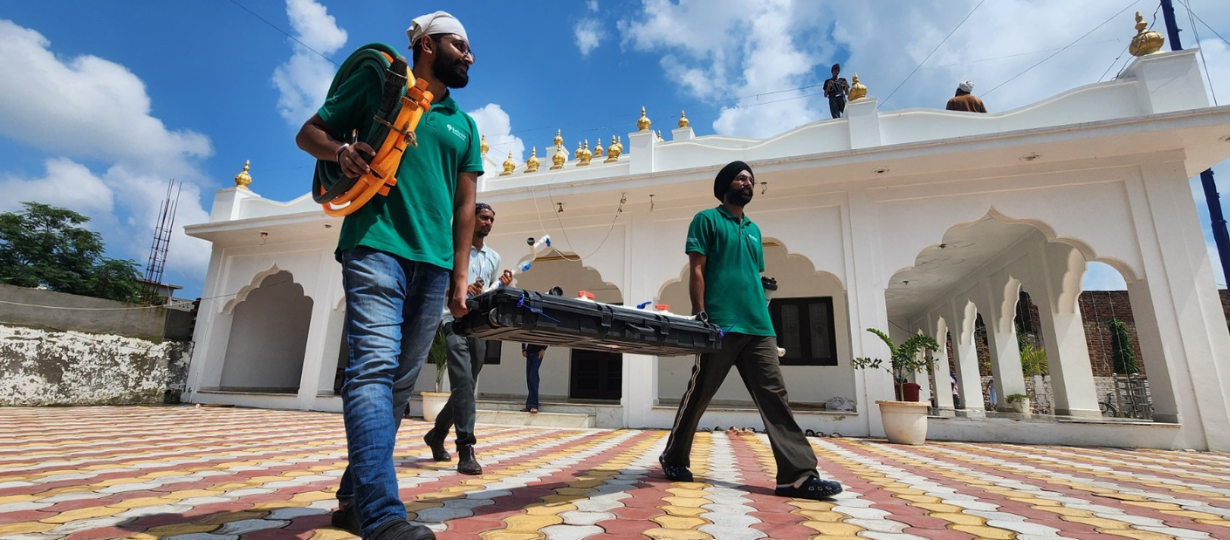
Shri Anant Ambani: "We are committed to walk alongside Punjab through this difficult time."
* The entire Reliance family, including Reliance Foundation, Vantara, Reliance Retail and Jio are delivering immediate on-ground response
* Ten-point humanitarian support reaching over 10,000 families in the hardest-hit villages in the state
* The strategic relief efforts include nutrition, water, emergency shelters, livestock care, and rescue of displaced wild animals
Chandigarh, September 10, 2025: In the wake of the devastating floods that have swept through Punjab, Reliance has activated a comprehensive ten-point humanitarian response in the state.
Working shoulder-to-shoulder with the state administration, panchayats, and local stakeholders, teams have been on the ground bringing urgent relief, especially across the worst-affected villages in Amritsar and Sultanpur Lodhi.
"Our heart goes out to the people of Punjab in this hour of suffering. Families have lost homes, livelihoods, and a sense of security. The entire Reliance family is standing with them — providing food, water, shelter kits, and care for both people and animals. This ten-point plan reflects our deep belief that We Care. We are committed to walk alongside Punjab through this difficult time,” said Shri Anant Ambani, Director, Reliance Industries Limited.
On-ground action: Ten-point response includes:
Nutrition support
1. For crucial nutrition, dry ration kits with essential food supplies for 10,000 most-affected families.
2. Voucher-based assistance worth ₹5,000 each for 1,000 of the most vulnerable households — especially single-women and elderly-led families.
3. Dry ration support for community kitchens to provide immediate nourishment for communities.
4. Deployment of portable water filters in waterlogged areas to ensure safe drinking water.
Shelter Support
5. Emergency shelter kits with tarpaulins, groundsheets, mosquito nets, ropes, and bedding to protect displaced families.
Public Health Risk Management (PHRM)
6. Health awareness sessions and disinfection of water sources to curb post-flood disease outbreaks.
7. Distribution of sanitation kits with hygiene essentials for every affected household.
Livestock Support
8. Veterinary surveys show livestock in severe distress due to waterlogging; urgent care is being prioritised.
9. Reliance Foundation and Vantara, with the Animal Husbandry Department, setting up livestock camps to provide medicines, vaccines, and care. 3,000 silage bundles are being distributed for nearly 5,000 cattle.
10. Vantara's 50+ member expert team, with modern rescue gear and years of expertise is supporting efforts to treat rescued animals, ensuring dignified scientific cremation for deceased animals and preventing potential disease outbreaks in coordination with local authorities.
Reliance teams are working round-the-clock in close coordination with the District Administrations, the Animal Husbandry Department, and local Panchayats to deliver immediate, life-saving support while planning medium-term recovery actions. The Jio Punjab team worked tirelessly to restore network in flood-affected areas in co-ordination with NDRF teams, ensuring 100% reliable connectivity across the state.
The Reliance Retail team, in co-ordination with Reliance Foundation and volunteers, is dispatching a meticulously curated dry-ration kit and sanitation kit of 21 essential items for nourishment and hygiene of the most affected communities, identified through the Panchayats.
In this moment of crisis, Reliance is standing shoulder-to-shoulder with the people of Punjab, with collective action, care and compassion on the ground, to enable a swift, holistic and comprehensive recovery for the state to emerge stronger, together.
More Media Releases
Innovative, Accessible, Actionable Early Warning Solutions highlighted at Reliance Foundation–UN India Disaster Management convening in Gujarat
- 13 February, 2025
- Bhuj, Gujarat
- 8 min read
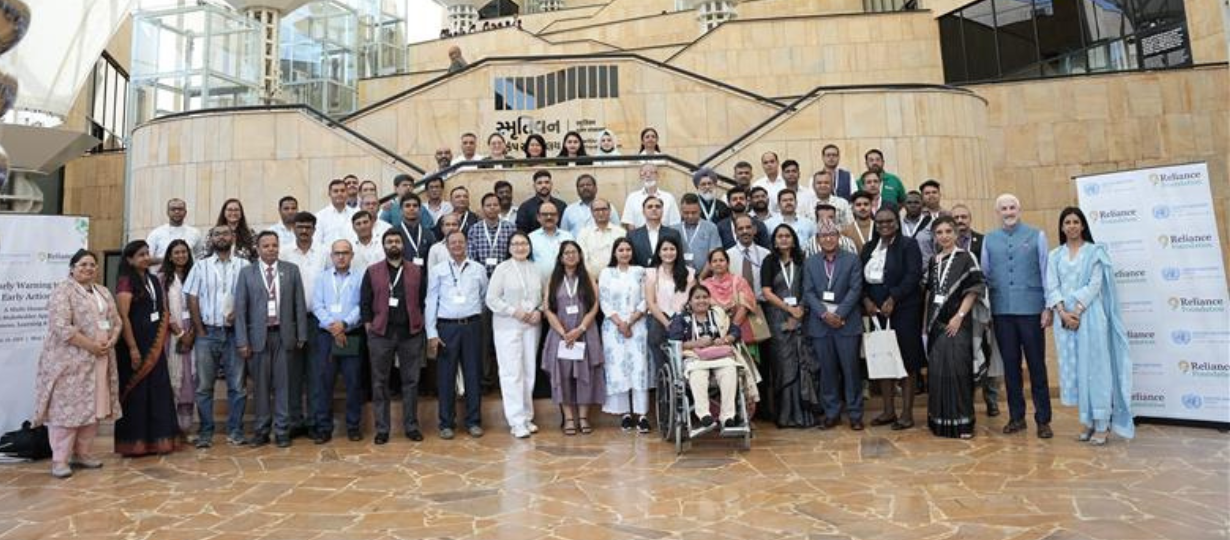
*This is the second in a series of convenings by Reliance Foundation and United Nations India, to share best practices, for India's future readiness in Disaster Risk Management
*Stakeholders from multiple Indian states and countries in the Global South came together
*Localised, sector-based Early Warning Systems, lessons and best practices from Gujarat discussed
*Learnings from India and the Global South on Anticipatory Action and the need to reach last-mile populations, focus of discussions
Bhuj, March 25, 2025: Experts called for bold and transformative actions for future readiness in Disaster Risk Management systems at the Reliance Foundation and the United Nations India convening here on Tuesday. The event 'Early Warning and Early Action - A Multi-Hazard, Multi-Stakeholders Approach: Experiences, Learning & Sharing' fostered crucial discussions and knowledge sharing to enhance disaster risk management in India.
Reliance Foundation and the UN in India have partnered to foster regional learning and innovative solutions in disaster risk reduction. As part of this partnership, a series of convenings are being held to enhance Early Warning Systems and Early Action with multi-hazard, localised, and sector-based approaches, emphasising the translation of warnings into effective life-saving actions.
The second in the series of convenings, was held at the Smritivan Earthquake museum in Bhuj. The city that has demonstrated remarkable resilience through devastating earthquakes and cyclones, provided a relevant setting for the discussions.
In her keynote address, Dr Jayanti S Ravi, Additional Chief Secretary, Government of Gujarat, emphasised the need for bold steps for the sake of the current generation and generations to come. “Kutch has faced multitude disasters from devastating earthquakes and cyclones to floods. Something very special about the culture of the state is its resilience as Kutchis are very resourceful. As we discuss mutual learnings, we also celebrate and take away special attributes of the people that we learn from. Even as these convenings enrich our own library of learnings, inspired by the vision of the Hon Prime Minister, we want this venue, Smritivan, to go further, to becoming a multi-hazard preparation, planning and training centre for social and behaviour change. This is the vision that we can collectively work towards, as part of 'Smritivan 2'," she said.
Mr Anupam Anand, IAS, CEO, Gujarat State Disaster Management Authority, mentioned the context of the Sendai framework and the PM's 10-point agenda for DRR reflecting on how Gujarat had made significant strides, with multi-departmental coordination integrated into state-level plans at the state, district and taluka level. In the case of Cyclone Biparjoy, for example, departments collaborated effectively to ensure zero casualty and economic loss.
The UN Resident Co-ordinator in India, Mr Shombi Sharp said, “Over 1.2 billion people could be displaced globally by 2050 due to extreme weather and natural disasters. Disaster risk, however, is not just about nature; it is about preparedness, speed and effectiveness of early warning and early action. The convening, part of the broader partnership between the UN in India and the Reliance Foundation, seeks to help strengthen multi-hazard, multi-stakeholder approaches for anticipatory action in our new reality of climate change. It is apt that this conversation is happening in Gujarat, a state where the UN has been a steadfast partner and that faces numerous natural hazards, but has also demonstrated excellence in preparedness and response. Through these convenings, we hope for a much stronger focus, sharing from India's experiences and best practices with countries in the global South and learning from experiences abroad. Together we can ensure that every life, every livelihood and every future is protected. Saath hai, to saambhav hai."
Mr Sudarshan Suchi, Chief Development Officer at Reliance Foundation said, “At Reliance Foundation, we understand that building true disaster resilience requires a collective effort. Through this series of convenings, we underscore our commitment to collaboration across sectors. We aim to create a platform for sharing vital knowledge and innovative solutions by harnessing the power of technology and data, so we can empower vulnerable communities to withstand future challenges. From the Bhuj earthquake to Biparjoy, Reliance has been with the state of Gujarat at every turn. From innovation to community engagement, from swift action to strong partnerships, all our actions are guided by Reliance's overarching 'We Care' philosophy."
Key dignitaries and speakers included Mr Anand Babulal Patel, IAS., District Collector, Kutch and Lt. Col. Sanjeev Kumar Shahi, National Disaster Management Authority (NDMA). Representatives from the Government of Gujarat, NDMA, GSDMA, GIDM, UN agencies, civil society organisations shared learnings and solutions. A field visit to Rapargarh and Jakhau the previous day, and a curated walk through the Smritivan Museum during the event, emphasised importance of early localised action.
Impact-based early warning system technology, lessons from the Global South, anticipatory action strategies and slow-onset disasters like drought and protection of livestock were discussed. Participants emphasised the need to invest in community response capacity and disability inclusion.
The previous convening in Bhubaneshwar, Odisha, in November 2024, had highlighted the state response and focus on livelihoods and gender. The Bhuj convening went another step forward to call for multi-sectoral coordination and a deeper understanding of technology.
The 'Early Warning to Early Action' convening series will document best practices, identify innovations, and aim for impactful policy-level outcomes to save lives and livelihoods. The Bhuj convening concluded with a call to step up momentum for early warning solutions to enhance disaster preparedness in India to ensure that no one is left behind.
More Media Releases
Early warning, Early Action: Reliance Foundation – UN India convening brings experts, ideas together in Odisha
- 19 November, 2024
- Bhubaneswar
- 7 min read
* Stakeholders from multiple Indian states and countries in the Global South came together
*Learnings from coastal ecosystems shaped discussions about ways to strengthen early warning and action
* The convening in Odisha marks a first in a series to capture best practices, identify innovations and drive meaningful policy outcomes for a more resilient future.
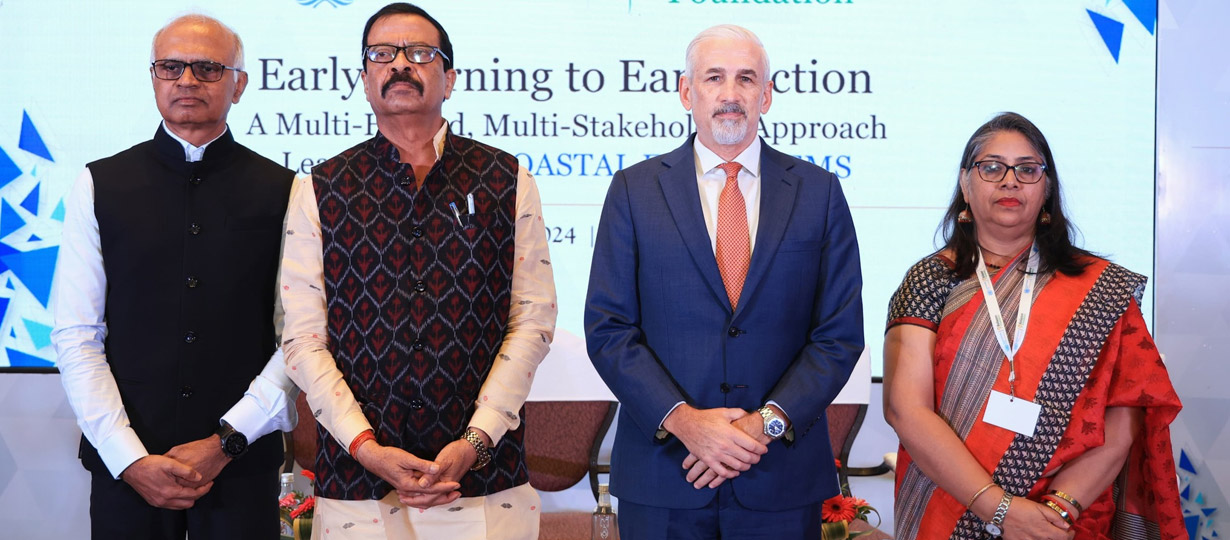
Building new ideas to strengthen early action during disasters, Reliance Foundation and the United Nations India convened stakeholders from the Global South to deliberate multi-hazard, multi-stakeholder approaches to early warning, here today.
The Odisha convening, titled ‘Early Warning to Early Action - A Multi-Hazard, Multi-Stakeholder Approach: Learning from Coastal Ecosystems’, is the first in a series of convenings that Reliance Foundation and the UN India are organising. The gathering highlighted Odisha’s leadership in early warning and early action in a disaster-prone coastal area with focus on livelihoods and gender.
Experts from state and national disaster management agencies including the National Disaster Management Authority, India Meteorological Department and Indian National Centre for Ocean Information Services, UN organisations, researchers, policy experts, academia and non-governmental organisations were part of in-depth discussions.
The Chief Guest at the convening, Mr. Suresh Pujari, Minister for Revenue and Disaster Management, Government of Odisha, said “We are working collectively to further strengthen early warning systems and we are happy that Odisha has been chosen as the first state to start this series of deliberations. The Odisha government works with various stakeholders on minimising the intensity of natural disasters. We will be working with the UN, Reliance Foundation and all other stakeholders for suggestions and technological assistance. We request the organisations we work with to find ways to integrate disaster prediction with information analysis for greater accuracy in early warnings.”
“As climate change drives more extreme events, there is a need to strengthen impact-based forecasting to ensure it translates more effectively to local action. We have witnessed the lifesaving potential of early warnings while serving communities during cyclones, floods and other extreme events. India is pioneering knowledge advancement in rapidly advancing early warning systems. We have been driving innovative solutions in early warning systems through extensive use of technology and approaches for effective reach and impact. The convening series, being organised by Reliance Foundation and the United Nations in India office, aims to work collectively with various stakeholders to realise the goal of translating knowledge into local action,” said Mr. Jagannatha Kumar, CEO, Reliance Foundation.
“Answering the UN Secretary-General’s call for Early Warning for All across the world, the convening today organised by the UN in partnership with Reliance Foundation is the first in a series of convenings on DRR. We're also showcasing the Government of Odisha’s leadership in Early Warning Systems for disaster response, a crucial story to tell and an opportunity to share best practices and knowledge with other states and countries in the Global South. The UN remains committed to supporting these efforts through our various agencies, working closely with the government, civil society and partners like Reliance Foundation to strengthen Early Warning Systems and build community resilience,” said Mr. Shombi Sharp, UN Resident Coordinatior for India.
Experts focussed on the present advancements in early warning systems, sharing varied perspectives on challenges and ways to strengthen early action, including deliberating approaches to future-proof disaster preparedness in the panel discussions ‘Current State of EWS and Early Action: Assessing effectiveness’ and ‘Future Proofing and Innovation towards Integrated Early Warning System’. The sessions also underscored the need for multi-hazard approaches and integration of socio-demographic information with meteorological data for targeted early action messaging.
Through discussions focussed on learnings from recent implementation of early warning systems in coastal states, youth and gender-led disaster risk reduction initiatives and integration of livelihood protection along with early warning systems.
The convening facilitated South-South knowledge exchange with experts from Sri Lanka and Bangladesh sharing their best practices and highlighting the importance of strengthening collaborations. The panellists also reflected on pre-convening field visits to villages in Balasore and Bhadrak districts to see the work of Reliance Foundation and the UN India, in collaboration with the administration. An interactive exhibition at the convening helped delegates experience innovations and further enhanced the knowledge exchange process on the country’s efforts to strengthen early warning and action.
The Early Warning to Early Action convening series aims to document best practices, identify innovations, and deliver impactful policy-level outcomes to save more lives and livelihoods.
More Media Release
Nature-Based Solutions: Disaster Risk Reduction
- 1 min read
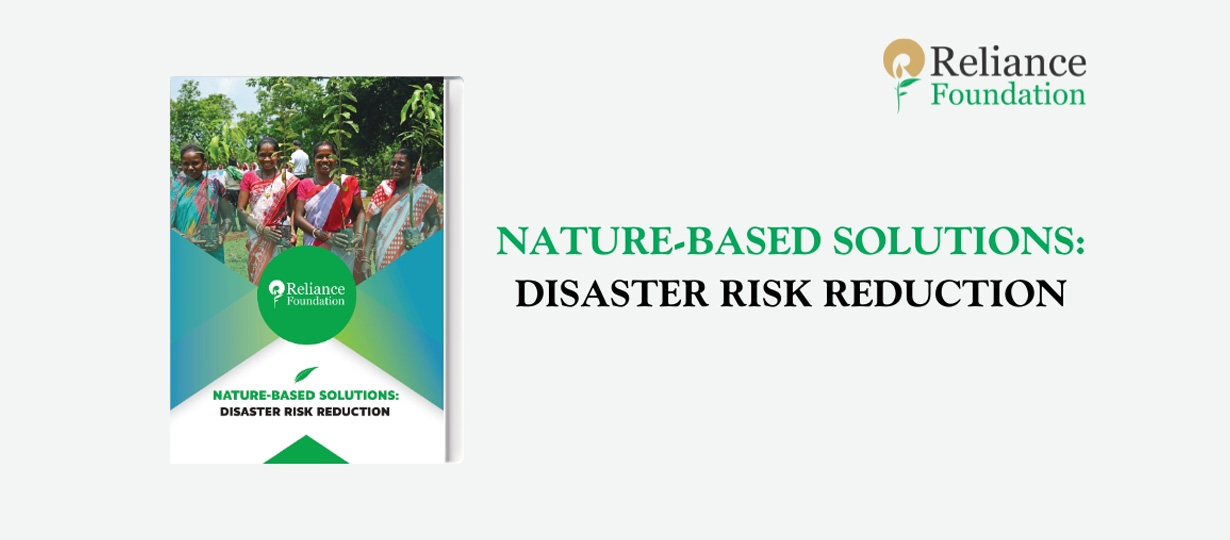
With climate change causing an increase in the frequency and intensity of disasters, there is an urgent global need to deal with these risks by taking an interconnected and pluralistic approach.
Solutions steeped in the ideas of biodiversity conservation such as safeguarding forests, mangroves, and active ecological restoration can help communities in preparation, response, and recovery from natural disasters. These referred to as Nature-based Solutions can help mitigate natural disasters like cyclones, floods, and even slow-onset events such as drought.
This publication by Reliance Foundation explores how nature-based solutions can help communities in preparation, response, and recovery from natural disasters.
More Publication
“We stand by the people of Kerala in this difficult time”: Reliance Foundation announces immediate relief and long-term development initiatives for landslide-hit Wayanad communities
- 06 August, 2024
- Wayanad
- 8 min read
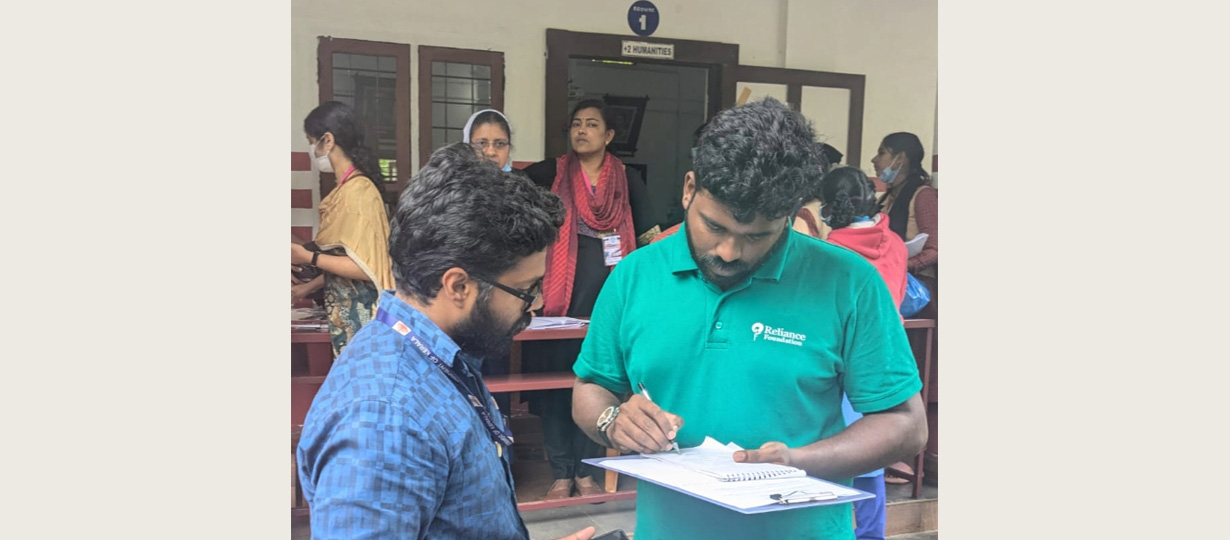
- In close co-ordination with state authorities and the SDMA, Reliance Foundation has rolled out immediate on-ground relief support
- Reliance Foundation’s disaster management team is delivering need-based essentials to people in camps coordinating with government
- Commitment to Wayanad includes a multi-pronged approach; from relief to rebuilding livelihoods
As landslides at Wayanad have created heartrending scenes of devastation, everything possible needs to be done to support the people at this time. Reliance Foundation as part of deep commitment to the nation, especially in its most challenging hours, announced a multi-pronged approach to support the people of Wayanad in the immediate, mid-term and long-term.
In co-ordination with the government authorities and the disaster management teams in the district, Reliance Foundation is on the field in co-ordination with local authorities to provide all possible support. The teams are delivering immediate relief to people located in camps including milk and fruits for essential nutrition. Over the next few weeks and months, Reliance Foundation has committed to holistic immediate, mid-term and long-term support for the severely affected district, along with sustainable initiatives to address prevention, strengthen early warning and early action.
Expressing grief at the unprecedented events in Kerala, Mrs Nita Ambani, Founder and Chairperson, Reliance Foundation said, “We are deeply pained by the suffering of the people of Wayanad and the immense damage caused by the landslides. At this time of extreme sorrow, our hearts go out to every single person and family who has been affected. Our Reliance Foundation teams on the ground are supporting the immediate response, recovery and long-term requirements for the people of the district. We stand by the people of Kerala in this difficult time.”
Earlier, during the floods of 2018, 2019, 2021 and through COVID-19, Reliance Foundation has provided relief and follow-up support to the state of Kerala. Building on its long-term disaster risk resilience initiatives, Reliance Foundation will strengthen collaborative and community-based efforts at Wayanad and other vulnerable regions in the country.
Reliance Foundation’s multi-pronged commitment to Wayanad includes:
1. Food & nutrition including providing ready-to-eat nutritious foods including fruits and milk, dry rations, kitchen utensils and other essentials such as stoves to help families in resuming kitchens
2. Water, Sanitation and Hygiene (WASH) including provision of toiletries, essential hygiene requirements and basic daily requirements for hygiene and health
3. Shelter & living essentials including temporary shelters for affected populations, bedding, solar lanterns and torches, clothing and cleaning material to help people restart their households
4. Sustainable livelihood recovery for affected families to resume livelihoods including seeds, fodder, tools and vocational training to diversify income sources and focus on resilient agriculture tailored to Wayanad’s unique ecosystem
5. Education support including books and play material to ensure continuity of education for affected children
6. Ensuring reliable connectivity, Reliance Jio has installed dedicated towers and provided Jio Bharat phones, enhancing communication for residents, rescue workers, and disaster management teams to streamline activities and rebuild lives
7. Psycho-social support and community healing including counselling for trauma-affected individuals with experts, for social interaction to help people heal. These measures include special efforts to support children and youth
The Reliance Foundation team has already swiftly deployed personnel on the field for relief and is in discussions with state authorities. Each of the planned measures are being progressively rolled out synchronizing with the state and the other disaster response agencies to ensure that response is effective, reaching the people in a timely manner, in their darkest hour of pain.
Reliance Foundation remains committed to supporting the people of Wayanad in the long term, to enable a resilient and thriving community for the future.
More Media Release
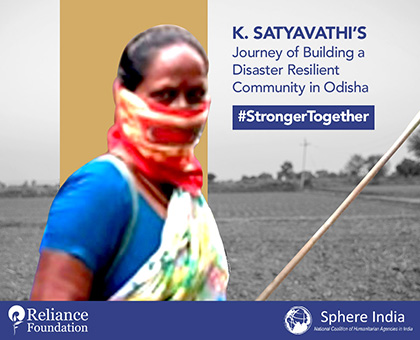
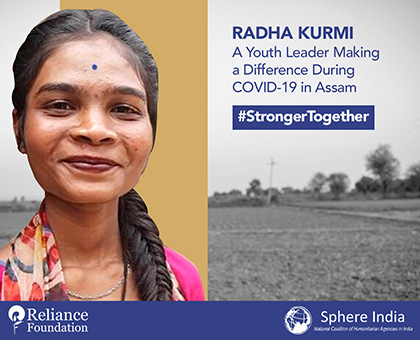
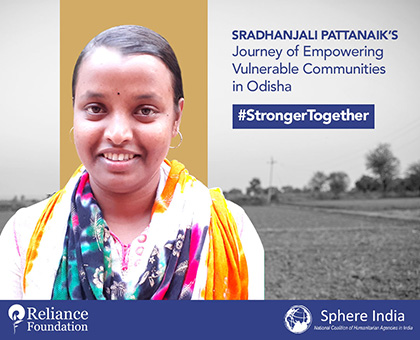
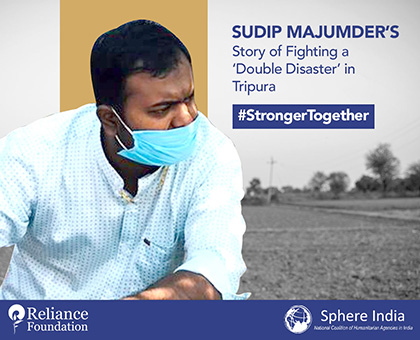
‘Stronger Together’: A compendium of stories of courage & resilience during disasters
- 2 min read
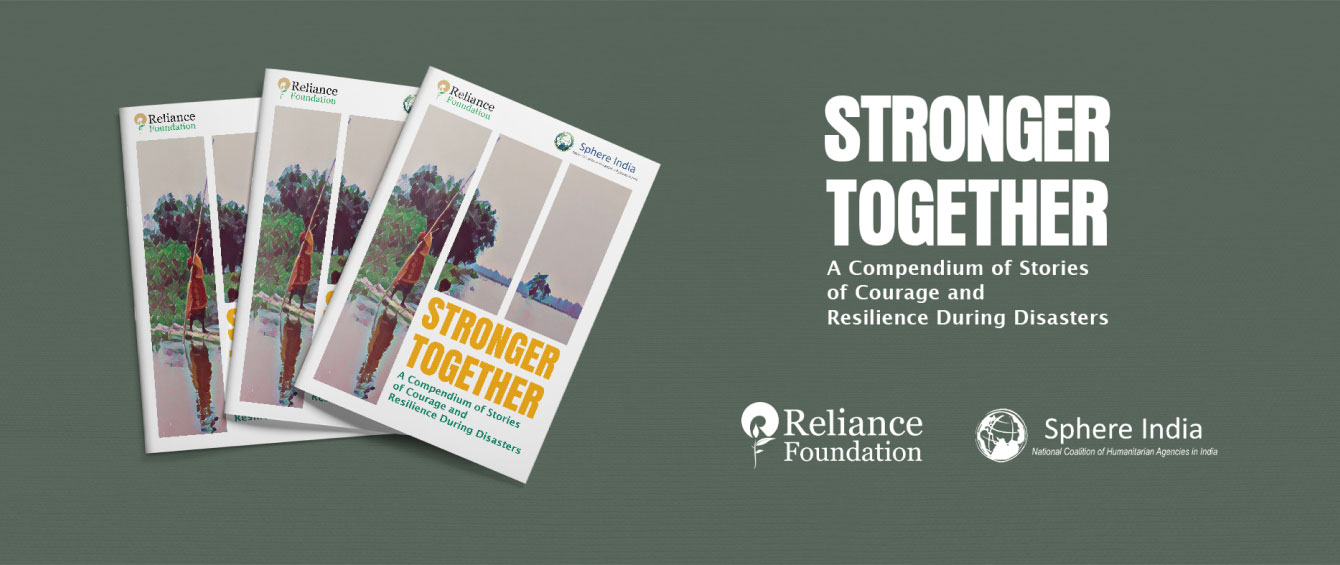
Individuals at the grassroots have been a vital part of the support system for mitigation and response efforts during disasters in India. These individuals are developing the capacities and leading efforts to drive disaster management and resilience in their communities.
‘Stronger Together’: A compendium of stories of courage & resilience during disasters, prepared by Reliance Foundation and Sphere India, captures best practices by individuals at the grassroots level for mitigation, preparedness, and response to various disasters in India.
It serves as a powerful source of inspiration for others to learn and draw strength, enabling them to better prepare for and respond to disasters in India.
The stories presented in this compendium are based on the experiences and perspectives of individuals at the grassroots level who have actively contributed to disaster management and resilience efforts in their communities.
‘Stronger Together’ is a tribute to the ten individuals who have shared their stories of courage and resilience during times of disasters, along with millions of other individuals whose efforts often go unnoticed, yet continue to inspire the community with their relentless work, every day, contributing towards humanity by helping each other during times of emergency and crisis.
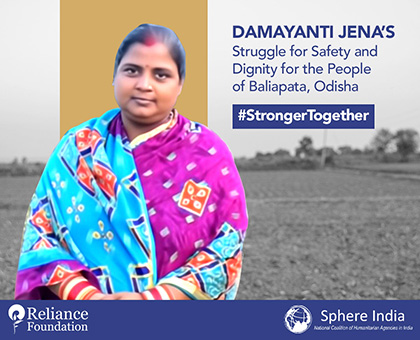
Organisations featured in the publication
This publication would not have been possible without the time and support of the organisations that have contributed immensely towards the lives and initiatives, of the individuals captured in this compendium: SEEDS India, Centre for Advocacy and Research (CFAR), Save the Children India, Swayam Samajik Vikas Sanstha, Ghoghardiha Prakhand Swarajya Vikas Sangh (GPSVS), Centre for Youth Development and Activities (CYDA), Plan India, and Bagma FPO. Their commitment and dedication have been crucial in bringing about positive change and making a significant impact on the lives of countless individuals.
